0%

Choosing the best aluminum door manufacturer in China takes more than comparing quoted prices. A dependable supplier should explain how its doors are designed, fabricated, finished, and checked before shipment. For global buyers, small details matter: frame thickness, corner joints, coating consistency, glazing options, and hardware compatibility can affect installation and service life. Details matter. Ask for drawings, material specifications, and inspection records, not only polished product photos.

An Aluminum Door may be intended for a home, office, storefront, or large project, and each use brings different requirements. A manufacturer with relevant project experience can help match profiles, opening styles, thermal performance, and finishes to the site. Still, experience claims deserve verification. Review factory capabilities, sample quality, quality-control procedures, and references where available. Confirm which standards and certificates apply to your destination market, and check their scope and validity directly. Clear answers are useful; vague promises are not.

Price matters, but so do lead times, packaging, spare parts, warranty terms, and communication across time zones. Request a detailed quotation that separates product options and shipping assumptions. No supplier is perfect. A delayed reply or unclear drawing can reveal a process that needs discussion before a large order. This guide explains practical ways to compare Chinese manufacturers, reduce avoidable sourcing risks, and choose a partner whose products and service fit your project—not just the lowest bid.
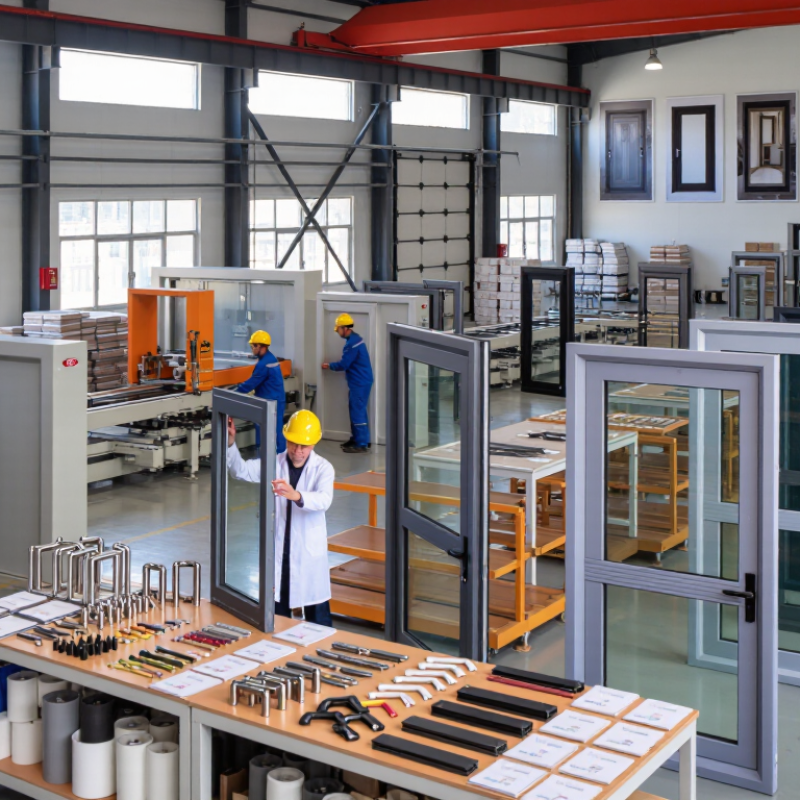
Best Aluminum Door Manufacturer in China for Global Buyers

Aluminum Door Basics: 6063-T5 Profiles and Common Door Systems

6063-T5 is common in architectural door frames because it extrudes well and offers a useful balance of strength and finish quality. T5 means the profile is cooled after shaping and then artificially aged.

ASTM B221 lists a 145 MPa minimum tensile strength for 6063-T5 extrusions in applicable thickness ranges; the exact requirement depends on section dimensions. The Aluminum Association’s Aluminum Standards and Data provides further alloy and design-property references. These figures describe the profile, not a complete door’s performance.

Common systems include hinged entry doors, sliding doors, folding panels, and casement-style units. Sliding systems suit narrow patios, but track drainage and roller access need attention. Hinged doors seal against a frame, while folding systems require careful alignment across multiple panels.

A drawing can look precise. On site, small gaps matter. Thermal breaks, gaskets, locks, glazing, and installation all affect comfort and air leakage.

Test the complete assembly to applicable performance standards, rather than judging it by frame alloy alone.

A frequent design blind spot is hardware clearance; it deserves another review before production.

From Extrusion to Assembly: The Aluminum Door Manufacturing Process

Aluminum door production begins with alloy billets, which are heated and pressed through a shaped steel die. The profile emerges hot. It is then cooled, stretched straight, and aged to reach the specified strength. Technicians cut each extrusion to length and machine drainage slots, lock recesses, and hardware holes. Thermal-break strips may be inserted before frame assembly. Small alignment errors matter: a few millimeters can affect drainage, glazing fit, or locking pressure.

Surface treatment follows cleaning and preparation. Anodizing or powder coating helps protect the finish, but coating thickness and color consistency need regular checks. Frames are joined with corner cleats or other specified connectors, then fitted with gaskets, glass, and hardware. The International Aluminium Institute’s lifecycle data indicates that recycling aluminum uses about 5% of the energy required for primary production. That makes recycled-content sourcing relevant, though alloy composition and traceability still require verification. Ask manufacturers for extrusion tolerances, finish records, and sample inspection results. A polished sample is useful, but it cannot show every weakness in production.

Best Aluminum Door Manufacturer in China for Global Buyers — From Extrusion to Assembly: The Aluminum Door Manufacturing Process

Manufacturing Stage Main Materials or Inputs Key Operations Quality Checks Typical Output
1. Design and specification review Door drawings, opening dimensions, performance requirements, hardware schedule, finish selection Confirm door configuration, frame and sash profiles, glazing or panel options, opening direction, and applicable project requirements. Review dimensions, interfaces, hardware compatibility, and specified air, water, and structural performance requirements. Approved drawings, bill of materials, and production specifications
2. Aluminum billet preparation Aluminum extrusion billets; 6063 alloy is commonly used for architectural profiles Heat billets and prepare them for extrusion according to the alloy and production process. Check material identification, billet condition, and production records. Prepared billet for profile extrusion
3. Profile extrusion Billets and profile-specific extrusion die Force heated aluminum through the die to form frame, sash, mullion, and accessory profiles; cool and straighten extruded lengths. Inspect profile dimensions, shape, surface condition, and straightness against the approved drawings and tolerances. Extruded aluminum profiles
4. Profile aging and cutting Extruded profiles and cutting list Apply the specified aging treatment where required, then cut profiles to the lengths needed for door frames and sashes. Verify cut length, end condition, profile identification, and compliance with the production cutting list. Cut components ready for machining
5. Machining and drainage preparation Cut profiles, machining drawings, hardware locations Mill, drill, punch, and route profiles for joints, locks, hinges, handles, fasteners, and drainage paths as required by the design. Check hole and slot positions, machining dimensions, burrs, and that drainage openings match the design. Machined frame and sash components
6. Surface finishing Prepared aluminum profiles; specified coating or anodizing system Clean and pretreat profiles, then apply the specified finish, such as powder coating or anodizing, using the relevant process controls. Inspect color and appearance; verify coating or anodic-film requirements against the order specification and applicable test method. Finished profiles ready for assembly
7. Thermal-break assembly, if specified Aluminum profile sections and polyamide thermal-break strips Insert and mechanically roll or crimp the strips to join the interior and exterior aluminum sections in a thermally broken profile. Check strip placement, profile alignment, and joining integrity in accordance with the system requirements. Thermally broken profiles, when included in the design
8. Frame and sash assembly Finished profiles, corner keys or connectors, fasteners, seals, and approved hardware Join frame and sash components, fit weather seals, and install hinges, locks, handles, rollers, or other specified hardware. Check corner joints, squareness, diagonal measurements, hardware operation, and seal continuity. Assembled door frame and sash
9. Glazing or panel installation Specified glass or infill panel, setting blocks, gaskets, and glazing accessories Install the glass or panel using the specified glazing method and compatible accessories; retain and seal it as required by the system design. Verify glass or panel type, visible condition, support and retention, gasket placement, and clearances. Glazed or panel-filled door assembly
10. Final inspection and functional checks Completed door assembly and approved inspection criteria Operate the door through its intended movement and check the fit of components before packing. Inspect overall dimensions, appearance, opening and closing action, locking, hardware, drainage details, and order-specific requirements. Performance testing is carried out when required by the project or standard. Inspected door ready for packing
11. Protection and packing Protective film or surface guards, corner protection, packing materials, labels Protect finished surfaces and vulnerable edges, secure hardware, and pack units to suit the transport and handling plan. Check product identification, quantity, packing condition, and consistency with shipping documents. Packed aluminum doors prepared for dispatch

Global Benchmarks: EN 14351-1 Testing and ISO 9001 Quality Systems

For global buyers, a Chinese aluminum door manufacturer should provide evidence against EN 14351-1, not just attractive samples. This European product standard covers external pedestrian doorsets and windows, with declared performance such as air permeability, watertightness, and resistance to wind load. Ask for test reports matching the proposed frame, hardware, glazing, and opening size. A result from a similar-looking door may not represent the supplied configuration. Small details matter. Check that the Declaration of Performance and product identification correspond to the quotation.

ISO 9001 supports consistent quality management, but it does not certify a door’s performance. The ISO Survey of Management System Standard Certifications reported 1,265,216 ISO 9001 certificates across 188 countries in 2022, showing how widely the system is used. That scale also makes scope checks important: confirm the certificate covers the actual manufacturing site and relevant processes. Review inspection records for coating thickness, corner joints, and sample measurements, not only the certificate. A certificate is not a guarantee. Buyers should also ask how failed inspections are recorded and corrected; that part is easy to overlook, and often revealing.

Performance Data Buyers Compare: U-Value, Air Leakage, and Water Tightness

Best Aluminum Door Manufacturer in China for Global Buyers
Performance Data Buyers Compare: U-Value, Air Leakage, and Water Tightness

For aluminum doors, attractive finishes are easy to photograph. Performance is harder to verify. Ask for whole-door test reports, not profile data alone, and check that the tested size and configuration match your order. The U.S. Department of Energy’s Energy Saver guidance estimates that windows account for 25–30% of residential heating and cooling energy use. That figure is a useful reminder: small rating differences can matter across a building.

Compare U-factor in consistent units; lower values indicate less heat transfer. NFRC 100 sets a recognized method for measuring and reporting fenestration U-factors. Air leakage should also be measured, not described as “tight.” ASTM E283 is commonly used to test leakage under a specified pressure difference. Request the result, test pressure, and specimen details. A number without those details is difficult to compare.

Water tightness needs the same scrutiny. ASTM E547 evaluates water penetration under cyclic static pressure, while the AAMA/WDMA/CSA 101/I.S.2/A440 standard classifies products by performance. Check the tested pressure and whether water entered the interior; do not rely on a generic “watertight” claim. Results can change with door size, seals, hardware, and installation. This is where buyers sometimes over-trust a single certificate. A careful comparison may take longer, but it is more useful than a polished brochure.

Best Aluminum Door Manufacturer in China for Global Buyers

Performance data buyers compare: U-value, air leakage, and water tightness

Thermal transmittance

U-value · W/(m²·K) · lower is better

Air leakage

At 100 Pa · m³/(h·m²) · lower is better

Water tightness

Test pressure · Pa · higher is better

These are illustrative procurement targets, not results from a specific manufacturer or universal pass/fail limits. Compare complete-door test reports using the same product configuration, test method, and rating criteria; project requirements and applicable standards vary by market.

Sustainable Sourcing: Aluminum Recycling Uses About 5% of Primary Energy

For global buyers comparing aluminum door manufacturers in China, recycled content is worth checking alongside strength and finish quality. Recycling aluminum typically uses about 5% of the energy required to produce primary aluminum. The exact figure varies with scrap quality, sorting, and processing methods. That matters.

A door profile may contain recycled metal, but the percentage alone does not prove lower overall impact. Ask suppliers how they separate alloys and verify material records. Mixed scrap can affect consistency if sorting is poor. Request details for the actual profile, not only a general factory statement. A small sample section can reveal surface marks, uneven coating, or dimensional issues before a large order.

Also consider the door’s service life. A durable frame with suitable thermal breaks may reduce replacement needs and help limit heat transfer. Yet recycled aluminum cannot compensate for weak seals or poor installation. It is easy to focus on one impressive number. Buyers should compare recycled-content documentation, product testing, finish specifications, and packaging plans together. Transport distance and production waste also deserve attention, though they are sometimes missing from supplier discussions.

FAQS

What should an EN 14351-1 test report show?

It should cover the proposed external door configuration. Check air permeability, watertightness, and resistance to wind load. Small details matter.

Is a report for a similar-looking door enough?

Not necessarily. Match the report to the frame, hardware, glazing, and opening size in your order. The product identification should also match the quotation and Declaration of Performance.

What does ISO 9001 confirm?

It supports consistent quality management, but does not certify door performance. Confirm its scope covers the actual manufacturing site and relevant processes.

Which factory records are useful to review?

Ask for inspection records covering coating thickness, corner joints, and sample measurements. Also ask how failed inspections are recorded and corrected. That can be revealing.

How much energy does aluminum recycling typically use?

It uses about 5% of the energy required for primary aluminum production. The figure varies with scrap quality, sorting, and processing methods.

How can buyers check recycled content?

Request material records for the specific door profile, not just a general factory statement. Ask how alloys are separated. Mixed scrap can affect consistency.

Does recycled content alone prove a door has lower overall impact?

No. Compare material documentation, product testing, finish specifications, and packaging plans together. Transport distance and production waste matter too. One figure is not enough.

What should a sample reveal before a large order?

Inspect a small profile section for surface marks, uneven coating, and dimensional issues. Consider seals, thermal breaks, and installation quality as well. I would not treat one clean sample as proof.

Conclusion

Choosing the right Aluminum Door manufacturer requires more than comparing appearance and price. Buyers should understand how 6063-T5 aluminum profiles support common door systems and how each product moves from extrusion through cutting, machining, finishing, and assembly. Consistent production controls help ensure that doors fit their intended openings and perform reliably in different applications.

For international projects, compare documented performance rather than relying on broad claims. Relevant considerations include testing aligned with EN 14351-1, quality systems such as ISO 9001, thermal transmittance (U-value), air leakage, and water tightness. Ask for clear test data and specifications suited to the project’s climate and requirements. Sustainability is another useful measure: recycling aluminum can require about 5% of the energy used to produce primary aluminum, making recycled content and responsible material sourcing important factors in supplier evaluation.

Ethan

Ethan

Ethan is a professional marketing specialist with a deep understanding of the company’s products, their practical applications, and the needs of the customers they serve. He regularly contributes expert articles to the company website, sharing clear, useful information that helps readers understand......