0%

Aluminium Washroom Door manufacturers in China serve projects ranging from compact office restrooms to busy hotels, schools, and public facilities. The right door should handle humidity, frequent cleaning, and repeated use without becoming difficult to operate. Small details matter. Look closely at frame joints, edge finishing, hinge alignment, and the feel of the lock.

This guide examines leading Chinese manufacturers through practical criteria: product range, material specifications, customization options, quality-control information, and export support. Buyers should request clear drawings, finish samples, hardware details, and project references before comparing quotations. A low price alone says little about service life. Even a polished catalog cannot replace a careful review of construction details.

No source was provided for a verifiable quotation from a named Aluminium Washroom Door expert, so I will not invent one. That matters. A credible supplier comparison should distinguish confirmed product information from marketing claims, and it should acknowledge where evidence is limited. Use this overview as a starting point, then verify specifications directly with each manufacturer.
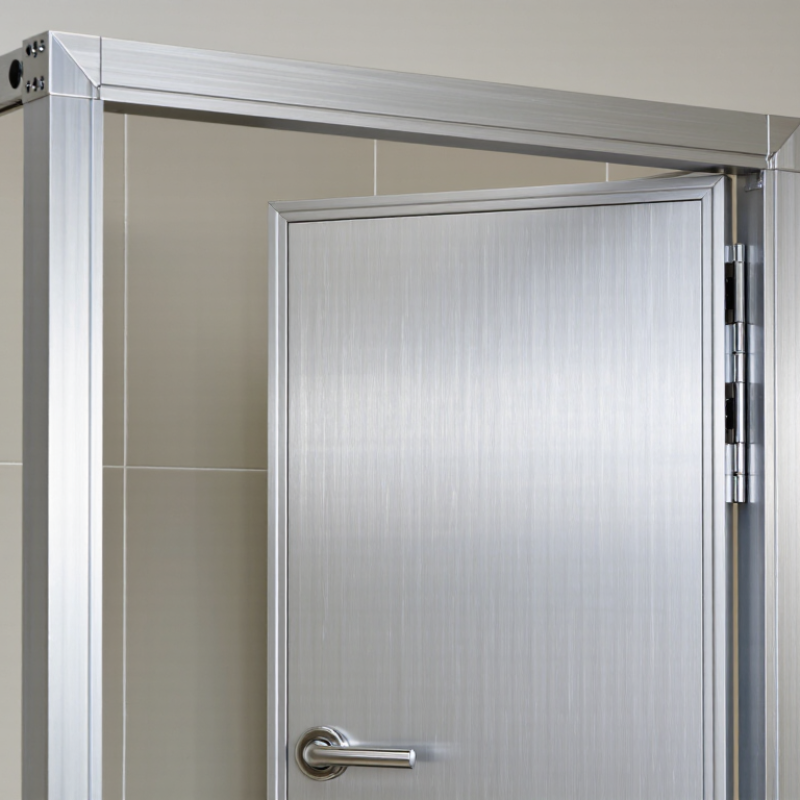
Top Aluminium Washroom Door Manufacturers in China

Market Scope: China’s Aluminium Washroom Door Sector and 6063 Alloy Profiles

China’s aluminium washroom door sector serves hotels, offices, schools, hospitals, and residential projects. Buyers often compare frame durability, surface finish, hardware compatibility, and production consistency. In humid washrooms, water collects around lower rails and hinge recesses, so drainage and edge protection deserve attention. Small details matter. A smooth finish alone cannot prevent problems caused by poor assembly or standing water.

6063 alloy profiles are widely used because they extrude into clean, consistent frame shapes and accept anodizing or powder coating. Profile design still matters: narrow sections may look refined but leave less room for robust hinges or secure fixings. Alloy grade does not guarantee performance. Ask manufacturers to document alloy and temper, profile dimensions, wall thickness, finish specifications, and inspection methods. A cut sample can reveal burrs, uneven coating, or weak corner joints. Check the corners. Some project specifications also overlook door weight and frequent-use cycles; those details should be reviewed before production, not after installation.

Product Types: Frame Systems, Door Panels, and 6063-T5 Aluminium

Top Aluminium Washroom Door Manufacturers in China

A washroom door is a system, not just a panel. The frame must stay square under frequent opening, while hinges and latches need secure fixing points. Slim profiles save space, but overly narrow sections can flex. Check corner joints, wall-fixing details, and clearances around floor finishes. Small details matter.

Door panels may use aluminium skins over a lightweight core, or solid aluminium sections. The right choice depends on privacy, impact risk, cleaning routines, and expected traffic. A smooth, sealed surface is easier to wipe, but poorly finished edges can still collect moisture and grime. One practical weakness: catalogue descriptions rarely explain how panels behave after years of daily use.

For frame profiles, 6063-T5 aluminium is common because it extrudes well and supports consistent shapes. The Aluminum Association’s Aluminum Standards and Data reports minimum tensile strength around 145 MPa and yield strength around 105 MPa for specified 6063-T5 products. These values depend on product dimensions and applicable specifications; they are not a guarantee for every finished frame. Ask for alloy and temper documentation, profile-wall dimensions, and test details. A heavier panel is not automatically a stronger door. The complete assembly matters.

6063 Aluminium Alloy: Chemical Composition Limits

6063-T5 is a heat-treated aluminium alloy commonly used in extrusion profiles such as washroom door frames. This chart shows the specified maximum content by weight for each listed element. Silicon is specified at 0.20–0.60% and magnesium at 0.45–0.90%; the other values shown are maximum limits, not target concentrations. Composition limits are based on ASTM B221 for 6063 aluminium alloy.

Manufacturer Comparison: Certifications, Production Capacity, and Project Records

When comparing top aluminium washroom door manufacturers in China, check what each certificate actually covers. An ISO 9001 certificate should match the producing site and current scope, not merely appear in a sales file. Ask for coating specifications, hardware test records, and inspection criteria for door thickness, squareness, and finish. A sample helps. Inspect its edges and hinges, not just its front face.

Capacity needs context. The International Aluminium Institute reported global primary aluminium production of about 70.6 million tonnes in 2023; this shows supply scale, not a factory’s door-making ability. China’s National Bureau of Statistics recorded construction output of roughly 31.6 trillion yuan that year, but broad construction figures cannot verify a supplier’s production line. Request monthly output for comparable door models, shift patterns, lead times, and recent inspection records. I would not treat a large factory figure as proof; that shortcut is tempting, but weak.

Project records reveal whether capacity translates into delivery. Request references for washroom installations with similar traffic, humidity, panel dimensions, and hardware requirements. Compare order quantities, delivery dates, defect handling, and completion photos; verify at least one reference directly when practical. Photos can flatter. One missing detail matters: ask how the manufacturer handled replacement panels or site adjustments, since records often highlight installation and omit the less tidy follow-up.

Quality Benchmarks: GB/T 5237 Coating Standards and Corrosion Testing

Washroom doors face repeated cleaning, trapped moisture, and abrasion around handles and lower edges. GB/T 5237 is a key reference for architectural aluminium profiles and their surface treatments. GB/T 5237.3-2017 covers powder-coated profiles. Ask manufacturers for the applicable coating class, measured film thickness, adhesion results, and pretreatment records. A certificate alone tells little about how a finished door’s corners were handled. Small gaps matter.

Corrosion tests need clear methods and acceptance limits. GB/T 10125 describes neutral salt spray testing, while the relevant GB/T 5237 part sets product requirements. Specify exposure duration and inspect for blistering, coating loss, and corrosion creep at cut edges. NACE International’s 2016 IMPACT study estimated global corrosion costs at US$2.5 trillion annually, or about 3.4% of global GDP. That figure is not washroom-specific, but it shows why coating quality deserves scrutiny. One limitation remains: a test coupon may not reflect a door’s joints or drilled holes. Check those details on production samples, too.

Top Aluminium Washroom Door Manufacturers in China — Quality Benchmarks: GB/T 5237 Coating Standards and Corrosion Testing

Evaluation Dimension Relevant Standard or Reference Quality Benchmark to Check Evidence to Request Assessment Guidance
Aluminium profile specification GB/T 5237.1-2017, Aluminium alloy building profiles — Part 1: Base profiles Confirm the profile alloy, temper, dimensions, and applicable product requirements against the contract and drawing. Profile inspection report, material documentation, and dimension records for the supplied batch. This part covers base profiles; it does not by itself certify the complete washroom door assembly.
Anodized finish GB/T 5237.2-2017, Aluminium alloy building profiles — Part 2: Anodized profiles Check that the specified anodizing finish and applicable requirements are identified and verified using the cited edition. Finish specification and test report identifying the profile, finish, standard edition, and tested sample. Compare the reported results with the agreed finish class and project specification; do not assume every anodized finish has the same requirements.
Electrophoretic finish GB/T 5237.3-2017, Aluminium alloy building profiles — Part 3: Electrophoretic coating profiles Verify that the product is specified as an electrophoretic coating system and that the relevant standard requirements are addressed. Coating-system details and a test report traceable to the supplied profile or production batch. Do not treat electrophoretic coating as interchangeable with powder coating; confirm the finish type in the purchase specification.
Powder-coated finish GB/T 5237.4-2017, Aluminium alloy building profiles — Part 4: Powder coating profiles Confirm the specified coating system and applicable requirements under the cited edition, including the required film and appearance checks. Coating inspection report, finish specification, and sample or batch identification. Require the supplier to state the applicable product requirements and report actual test results rather than providing only a generic “compliant” claim.
Fluorocarbon-painted finish GB/T 5237.5-2017, Aluminium alloy building profiles — Part 5: Fluorocarbon paint coating profiles Check whether a fluorocarbon paint system is specified and whether the reported tests match that system and the agreed requirements. Paint-system description, coating inspection records, and a report identifying the tested profile and finish. Use this part when the specified profile finish is fluorocarbon paint; it is not a substitute reference for powder coating.
Salt-spray corrosion testing GB/T 10125-2021, Corrosion tests in artificial atmospheres — Salt spray tests Check the test type, exposure conditions, specimen preparation, and evaluation criteria stated in the test report and product specification. Laboratory report stating the method, test conditions, duration, specimen details, and observed results. Salt-spray performance should be assessed against the applicable finish requirement. A test duration alone does not establish suitability for every environment or finish.
Coating adhesion GB/T 9286-2021, Paints and varnishes — Cross-cut test Review the reported cross-cut classification and compare it with the acceptance level specified for the coating and project. Test report with the method, rating, substrate and coating details, and sample identification. Make sure the acceptance criterion is stated in the contract or relevant product specification; the test method alone does not set a universal project acceptance level.
Washroom door assembly and hardware Project drawings, purchase specification, and applicable assembly requirements Separately assess door dimensions, frame and panel construction, hinges, latches, seals, drainage details, and installation interfaces. Approved drawings, hardware schedule, assembly inspection records, and installation details. GB/T 5237 addresses aluminium building profiles and their finishes; profile compliance alone is not proof that a complete door assembly meets every project requirement.
Traceability and supplier quality control Applicable GB/T 5237 part, approved specification, and purchase contract Confirm that inspection documents correspond to the selected profile, finish, production batch, and ordered configuration. Batch records, material and coating reports, inspection dates, and sample-to-product traceability. Prefer current, product-specific evidence over undated brochures or reports that cannot be linked to the supplied goods.

This manufacturer-neutral comparison framework lists standards and evidence to verify; it does not rank individual suppliers or claim unverified test results. Confirm the applicable standard editions and acceptance criteria in the current contract and project specification.

Supplier Selection: Export Data, Customization, Lead Times, and After-Sales Service

Top Aluminium Washroom Door Manufacturers in China

Supplier selection should begin with verifiable records, not polished product photos. Check export declarations, destination markets, shipment dates, and product descriptions. UN Comtrade classifies aluminium doors, windows, frames, and thresholds under HS 761010. This category can show market flows, but it does not prove that a named factory made a shipment. Ask suppliers for redacted bills of lading or customs documents, then compare dates and product details. I would not treat one document as proof.

Customization needs a written specification. Record door thickness, core material, finish, hinge position, lock type, dimensions, and moisture-testing requirements. Request a physical sample before approving a large order. Small differences matter. A few millimetres can complicate installation. For lead times, ask for separate dates for drawings, sample approval, production, inspection, and dispatch. The World Bank’s 2023 Logistics Performance Index scored China 3.7 out of 5 overall; that national score offers context, not a delivery guarantee. Require a shipment schedule with buffer days and milestone updates. After-sales terms should state spare-part availability, response times, and how defects are documented. Keep the process practical: photograph damage on arrival, log batch numbers, and agree who pays for replacement parts. Even careful checks cannot prevent every delay.

FAQS

Why are 6063 alloy profiles commonly used for washroom doors?

They can form clean, consistent frames and accept anodized or powder-coated finishes. Alloy grade alone does not guarantee durability.

What should I inspect on a physical sample?

Check wall thickness, coating, burrs, hinges, and corner joints. Check the corners. A smooth front can hide weak assembly.

Which documents should I request from a manufacturer?

Request current certificates covering the production site, plus coating details and hardware test records. Confirm inspection criteria for thickness, squareness, and finish.

How can I judge a factory’s production capacity?

Ask for monthly output on comparable doors, shift patterns, lead times, and recent inspection records. A large factory figure is not enough.

What makes project references useful?

Look for washroom projects with similar humidity, traffic, dimensions, and hardware. Verify a reference when practical, and ask about replacement panels or site adjustments.

Can export documents prove a factory made a shipment?

Not by themselves. Compare redacted shipping or customs records with dates, destinations, and product descriptions. One document is not conclusive.

What details belong in a customization specification?

Record thickness, core material, finish, dimensions, hinge position, lock type, and moisture-testing requirements. A few millimetres can complicate installation.

How should I manage delivery and after-sales support?

Set separate dates for drawings, sample approval, production, inspection, and dispatch. Agree on spare parts, response times, and defect records. Keep buffer days; delays can still happen.

Conclusion

China’s Aluminium Washroom Door sector is supported by a broad supply base of 6063 aluminium profiles, commonly selected for their balance of strength, workability, and resistance to moisture. Buyers can compare complete frame systems, door panels, and profiles made from 6063-T5 alloy, paying attention to dimensions, hardware compatibility, finish options, and suitability for the intended project.

A thorough manufacturer review should consider relevant certifications, production capacity, and documented project experience alongside quality controls. For coated components, assess alignment with applicable GB/T 5237 requirements and ask how corrosion resistance is tested. When selecting a supplier, review export experience, customization capabilities, realistic lead times, and after-sales support. Comparing these factors helps project teams judge not only the initial product offer but also whether a supplier can deliver consistent quality and dependable service from specification through installation and ongoing use.

Ethan

Ethan

Ethan is a professional marketing specialist with a deep understanding of the company’s products, their practical applications, and the needs of the customers they serve. He regularly contributes expert articles to the company website, sharing clear, useful information that helps readers understand......