Featured Fenestration & Architectural Mesh Door Systems
Engineered for high-end residential, commercial developments, and security-critical installations across North America, Europe, and Australia.
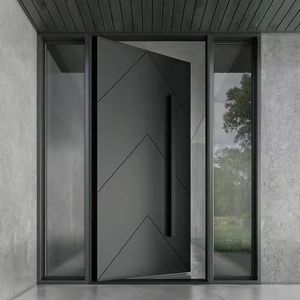
Modern Pivot Door Anti-Theft Minimalist Aluminum Entry
View Product Details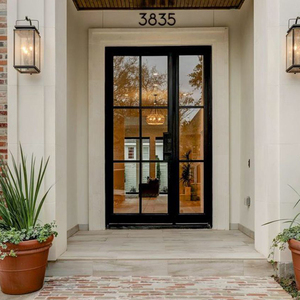
OUNA Exterior Aluminum French Doors with Security Grid
View Product Details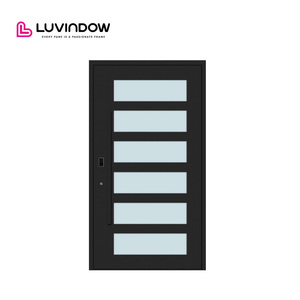
Secure Large Opening Aluminum Entry Pivot Doors
View Product Details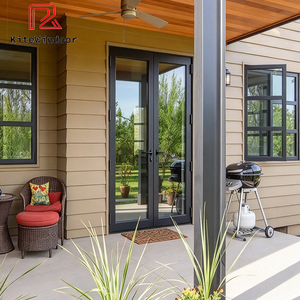
Rust Free Aluminum Alloy Casement Door for Wet Areas
View Product Details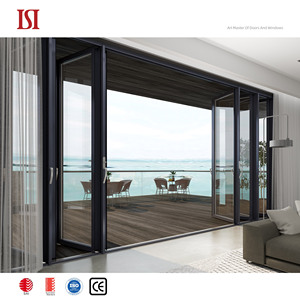
Extra Wide Aluminum Glass Folding Partition Door System
View Product Details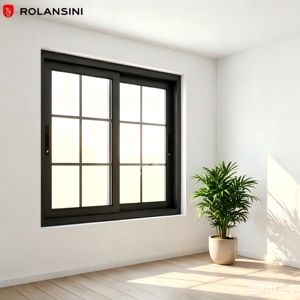
Rolansini Australia Residential Sliding Window AS2047
View Product Details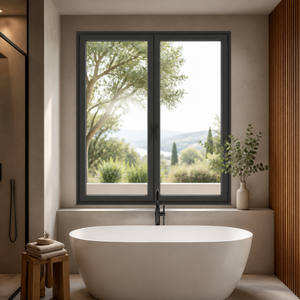
Professional Casement Aluminum Doors & Windows
View Product Details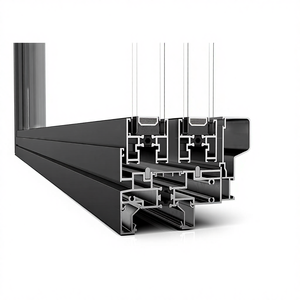
Fuson Soundproof Thermal Break Aluminum Bi Folding Windows
View Product DetailsExecutive Sourcing Analysis: Engineering Standards for CE Certified Aluminium Mesh Doors
In modern architectural design and real estate development, fenestration systems are no longer treated as simple passive barriers. They are high-performance building envelope components that dictate structural integrity, thermal efficiency, micro-climatic ventilation, and multi-layered physical security. For B2B importers, architectural specifiers, wholesalers, and commercial contractors, sourcing CE Certified Aluminium Mesh Doors requires navigating a sophisticated ecosystem of alloy metallurgy, wire mesh weave dynamics, mechanical hardware integration, and European norm compliance.
TropiAlu Windows & Doors Manufacturing Co., Ltd. operates at the intersection of high-capacity precision manufacturing and technical compliance. Spanning a 430,000 sq ft state-of-the-art production base in Foshan, Guangdong, our enterprise synthesizes nearly two decades of fenestration design expertise with global distribution capabilities. By maintaining direct control over profile extrusion, thermal break insertion, high-tensile mesh weaving, automated powder coating, and hardware fitting, TropiAlu delivers export-grade solutions designed explicitly to pass stringent international building codes.
1. Technical Anatomy & Structural Performance Requirements
The structural efficacy of an aluminium security mesh door depends on the harmonious interaction between three core subsystems: the extruded aluminium alloy framing profile, the high-tensile infill mesh medium, and the perimeter multi-point locking mechanism.
6063-T5 / T6 Alloy Extrusions
Architectural grade aluminium extruded to precise wall thicknesses (1.8mm – 2.5mm), offering superior yield strength and resistance to torsional deformation under heavy wind loads and mechanical impact.
316 Stainless Steel Mesh
Woven from 0.8mm – 1.0mm high-tensile wire with a wire tensile strength exceeding 900 MPa. Provides extreme shear resistance against knives, shears, and forced-entry impact tools.
Multi-Point Locking Integration
Dual or triple-stage mortise locks synchronized with stainless steel shoot-bolts that engage along top, side, and bottom frame tracks to dissipate concentrated point-load forces.
2. Decoding CE Certification (EN 14351-1 & EN 1627 Standards)
For European and global distributors, the CE marking is not merely a trading label; it is a legally binding assertion of compliance with European Union Construction Products Regulation (CPR 305/2011). Under EN 14351-1 (the product standard for windows and external pedestrian doorsets), aluminium mesh security doors must undergo rigorous type-testing in accredited European laboratories covering specific performance characteristics:
| Performance Characteristic | Harmonized Test Standard | Mandatory Engineering Criteria | TropiAlu Certified Value |
|---|---|---|---|
| Resistance to Wind Load | EN 12211 / EN 12210 | Frame deflection ≤ L/300 under differential pressure. | Class C5 / P3 (up to 2000 Pa) |
| Watertightness & Drainage | EN 1027 / EN 12208 | Zero un-controlled water penetration at test pressure. | Class E900 (Special High-Performance) |
| Air Permeability | EN 1026 / EN 12207 | Exfiltration/infiltration rate measurement at test pressures. | Class 4 (Highest Seal Efficiency) |
| Burglar / Forced Entry Resistance | EN 1627 through EN 1630 | Static loading, dynamic impact, manual burglary attempts. | Resistance Class RC2 to RC3 |
| Corrosion Resistance (Finishes) | ISO 9227 / EN 1670 | Neutral salt spray (NSS) chamber exposure testing. | Grade 5 (>480 Hours Salt Spray) |
Furthermore, TropiAlu integrates systems tested under North American standards (NFRC, NAFS, Intertek, CSA) and Australian standards (AS2047, AS5039), establishing a unified engineering matrix that allows global buyers to streamline cross-border compliance documentation under a single OEM vendor.
Future Procurement & Supply Chain Trends in Global Fenestration
The global wholesale procurement landscape for architectural aluminum doors is undergoing a seismic paradigm shift driven by environmental regulation, supply chain regionalization, digital BIM integration, and modular off-site construction. Understanding these macro trends is vital for project developers, importers, and hardware wholesalers aiming to mitigate margin compression and inventory obsolescence.
1. Carbon Neutrality & Decarbonized Aluminium Supply Chains
With the implementation of the European Union's Carbon Border Adjustment Mechanism (CBAM) and strict Scope 1-3 emission reporting requirements across North America, commercial buyers are increasingly scrutinizing the embodied carbon footprint of extruded aluminium frames. Future-proof sourcing strategies require partnering with manufacturers that utilize low-carbon primary aluminium ingots smelted via renewable hydropower or integrated post-industrial scrap recycling loops.
TropiAlu is actively optimizing profile extrusion lines to incorporate recycled content options that reduce carbon intensity to below 4.0 kg CO2e/kg Al without sacrificing tensile strength or alloy purity. This directly assists developers in acquiring LEED v4 and BREEAM certification credits.
2. The Rise of Hybrid Thermal Break & Mesh Systems
Historically, mesh security doors were treated as separate secondary installations mounted externally over primary entry doors. Sourcing trends show a explosive demand for integrated dual-cavity thermal break systems. These unified solutions combine a multi-chamber thermal break primary glass sash with an integrated, flush-mounted stainless steel mesh screen within a single architectural frame depth (typically 120mm to 180mm profile depth).
Integrated Modular Construction
Off-site fabrication where pre-glazed window and mesh door packages are delivered directly to jobsites in elevation-coded, protected crates, reducing site labor installation costs by up to 35%.
Custom OEM & Private Label Agility
Distributors require custom extrusion dies, bespoke hardware finishes (PVD, fluorocarbon powder coating), and white-label architectural packaging designed for rapid local distribution.
Smart Biometric & IoT Hardware
Transition from traditional mechanical keys to integrated smart motor locks, hidden biometric fingerprint scanners, and smart home automation integration via encrypted protocols.
Technological & Material Evolution Trends in Mesh Fenestration
Material science advancements are continually redefining what is achievable with architectural mesh door assemblies. As architects push for larger structural spans, slimmer frame sightlines, and uninterrupted outdoor views, manufacturing engineering must adapt.
1. Micro-Aperture Stainless Weaves & High-Definition (HD) Clarity
Traditional security mesh used 0.9mm wire with a standard 11x11 mesh count per inch, which provided security but slightly reduced natural light transmission and visible outdoor clarity. Modern material processing has led to the development of high-tensile micro-aperture wire (e.g., 0.7mm high-tensile 316 steel woven at a denser mesh count). This maintains equivalent shear strength under AS5039 test protocols while increasing visible light transmittance (VLT) by over 18%, offering near-invisible "clear-vision" security aesthetics.
2. Advanced Surface Finishing & Extreme Environment Coatings
Corrosion failure on metal door systems installed in coastal or high-humidity tropical zones typically occurs at the boundary layer between the mesh and the aluminium clamping channel due to galvanic corrosion. To eliminate galvanic action between dissimilar metals (stainless steel mesh and aluminium frame), TropiAlu implements a dual-barrier insulation protocol:
- PVC/EPM Isolation Gaskets: Non-conductive synthetic rubber seals completely isolate the stainless steel wire mesh edges from direct contact with the aluminium frame substrate.
- Electrostatic AkzoNobel Fluorocarbon Powder Coating: Both profiles and pre-woven mesh undergo an automated 7-stage pre-treatment immersion process followed by thermosetting powder application, achieving salt spray resistance exceeding 2,000 hours under ASTM B117 standards.
3. Thermal Break Profile Innovations (Polyamide PA66 GF25)
To comply with modern strict building energy codes (such as Energy Star 7.0 in North America and EnEV/GEG in Europe), door frames must prevent thermal bridging. TropiAlu incorporates 24mm to 34mm glass-fiber reinforced Polyamide (PA66 GF25) insulation strips inside profile extrusions. This structural thermal barrier reduces frame U-values (Uf) down to 1.3 - 1.6 W/m²K, allowing large-scale mesh/glass combination entrance doors to maintain energy performance even in extreme sub-zero or high-heat desert environments.
Why Partner with TropiAlu: Manufacturing Supremacy & Global Service
Sourcing overseas requires a manufacturing partner that minimizes project risk through transparent quality control, documented technical compliance, and flexible commercial terms. TropiAlu stands out as an industry leader in export-grade architectural fenestration.
End-to-End Vertical Integration
From raw aluminum billet heating, anodizing, profile extrusion, thermal break assembly, to CNC cutting and automated glass glazing, every process occurs within our 430,000 sq. ft. plant.
North American Showroom Network
Physical showroom facilities and local technical support in California and New Jersey provide domestic product inspection, mock-up evaluation, and rapid site-coordination response within 48 hours.
Jobsite Elevation-Coded Packaging
Every window and mesh door assembly is wrapped in heavy-duty protective film, fitted with impact-resistant corner guards, crated in ISPM-15 compliant wooden cases, and labeled by building elevation for easy jobsite sorting.
Comprehensive Procurement & Engineering FAQ
Clear, definitive answers to critical technical questions commonly raised by B2B buyers, architectural specifiers, and procurement officers.
TropiAlu provides a full compliance package including the official Declaration of Performance (DoP) under EN 14351-1, third-party laboratory Initial Type Testing (ITT) reports from accredited notified bodies (such as Intertek or TÜV), CE mark packaging labels, and factory production control (FPC) ISO 9001 quality audit certification.
316 stainless steel contains 2.0% to 3.0% Molybdenum, which dramatically enhances resistance to chloride pitting and crevice corrosion compared to 304 alloy. For installations within 5 kilometers of ocean coastlines or high-salinity marine air, TropiAlu strictly recommends 316 marine-grade mesh paired with fluorocarbon powder coating to prevent tea-staining and oxidation.
Utilizing heavy-duty 6063-T6 reinforced aluminum extrusions, our security pivot door leaf dimensions can reach up to 3,000mm in height and 1,800mm in width per panel. Bifold mesh door configurations can span total opening widths exceeding 12 meters using multi-panel top-hung rolling hardware with heavy-duty stainless steel carriage rollers.
Yes. We offer complete private-label OEM services including custom extrusion profile design, bespoke hardware branding, customized protective tape branding, specialized packaging designs, and technical architectural catalogs rendered under your corporate identity.
Standard production lead time for fully customized, CE-certified aluminum mesh door orders is 25 to 35 calendar days following final CAD shop drawing sign-off and deposit confirmation. Rapid production slots are available for urgent commercial jobsite schedules.
Partner with a World-Class Aluminium Fenestration Manufacturer
Take your project specifications to the next level with certified engineering excellence, factory-direct pricing, and uncompromised quality control. Contact our global technical engineering team today for shop drawing reviews, sample requests, and instant B2B wholesale estimates.
Contact Us