Featured Commercial & Residential Architectural Windows
Precision-Engineered CE & NFRC Certified Thermal Break Systems Ready for Global Export
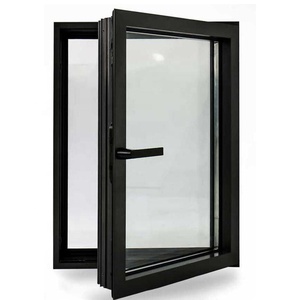
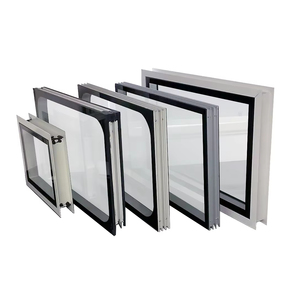
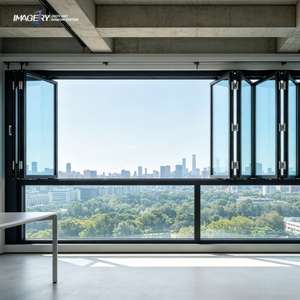
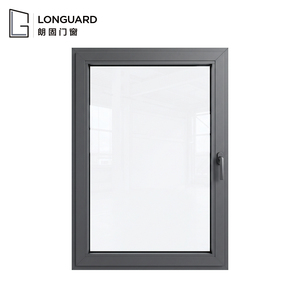

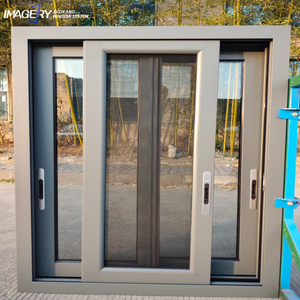
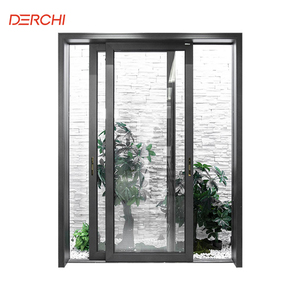
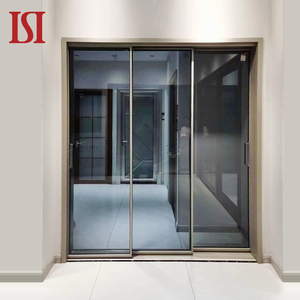
1. Technical Blueprint: The Strategic Value of CE Certification in Aluminum Fenestration
In modern architectural construction and international property development, specifying architectural fenestration systems requires an uncompromising commitment to structural integrity, thermal efficiency, and life-safety compliance. The CE Mark (Conformité Européenne) is not merely a export clearance sticker; it serves as a rigorous, standardized verification of a window system’s performance under the mandatory European standard EN 14351-1:2006+A2:2016 (Windows and doors - Product standard, performance characteristics). For international developers, general contractors, and facade engineers sourcing from China, partnering with verified CE certified aluminum window suppliers and exporters ensures that imported architectural elements seamlessly integrate into regulated job sites across Europe, North America, Oceania, and the Middle East without costly delays or code rejection.
Achieving authentic CE compliance demands that an aluminum window manufacturer subjects its profile extrusions, thermal break polyamide strips, double/triple insulated glass units (IGUs), and perimeter hardware gaskets to stringent Initial Type Testing (ITT) in accredited third-party laboratories. Crucially, suppliers must also implement a continuously audited Factory Production Control (FPC) system in accordance with EN ISO 9001. This guarantees that every production lot—from heavy-duty lift-and-slide doors to multi-cavity tilt-and-turn windows—matches the exact thermal, mechanical, and acoustic thresholds certified during laboratory evaluation.
Technical Information Gain: Unlike basic commercial windows, CE certified thermal break systems incorporate structural PA66 GF25 (25% glass fiber reinforced polyamide) mechanical insulation joints. These multi-cavity barriers effectively eliminate heat bridges, lowering frame thermal transmittance ($U_f$) down to values below 1.3 W/(m²·K) when combined with warm-edge spacers and argon-filled Low-E glazing.
Structural Integrity (EN 12210)
Engineered to resist wind loads up to Class C5 (2000 Pa design pressure), minimizing frame deflection under extreme typhoons and high-altitude pressure differentials.
Watertightness (EN 12208)
Utilizes multi-stage pressure equalization channels and EPDM weather-stripping to maintain water-tight performance under driven rain pressures up to Class E1050 (1050 Pa).
Thermal Performance (EN ISO 10077)
Delivers whole-window thermal values ($U_w$) engineered to meet demanding Passive House standards and net-zero carbon building codes.
2. Enterprise Engineering Capabilities & E-E-A-T Manufacturing Authority
As a premiere OEM/ODM direct manufacturer operating a 430,000-square-foot automated production facility in Foshan, Guangdong—the world’s epicenter of aluminum extrusion technology—our enterprise combines nearly two decades of precision manufacturing with profound global engineering compliance expertise. Supporting over 10,000 completed residential towers, commercial facades, luxury villa compounds, and cleanroom installations worldwide, our operational footprint spans North America, Australia, Europe, and Asia.
Our vertical integration covers every phase of the manufacturing lifecycle. We manage high-precision profile extrusion utilizing primary 6063-T5/T6 architectural aluminum alloy, automatic polyamide thermal break insertion, CNC multi-axis milling, automated robotic corner crimping, electrostatic PVDF/powder coating, and automated double-glazed unit (DGU) glass assembly. To satisfy stringent North American and European codes, our certified product packages carry dual-testing documentation across international frameworks, including CE (EN 14351-1), NFRC, CSA, ENERGY STAR, Intertek, NAFS, and AS2047.
| Performance Standard | European Norm (CE Framework) | North American Standard (NFRC / AAMA) | Australian Standard (AS2047) |
|---|---|---|---|
| Air Infiltration / Permeability | EN 12207: Class 4 (0.75 m³/h·m²) | ASTM E283: < 0.1 cfm/ft² | AS 4420.2: Pass (Low Air Infiltration) |
| Watertightness Resistance | EN 12208: Class E1050 (1050 Pa) | ASTM E547 / E331: Up to 15 psf (720 Pa) | AS 4420.3: Ultimate Limit Water Test |
| Wind Load Deflection | EN 12210: Class C5 (P3 = 2000 Pa) | AAMA/WDMA/CSA 101/I.S.2/A440: DP60 - DP90 | AS 4420.4: Serviceability & Ultimate Limit |
| Acoustic Isolation ($R_w / STC$) | EN ISO 717-1: $R_w$ (C; Ctr) = 42 (-1; -4) dB | ASTM E90 / E413: STC 40 - STC 45 | AS 1276.1: Sound Insulation Class |
To reduce cross-border procurement friction and guarantee real-time technical alignment, we maintain permanent company-owned showrooms and logistics support nodes in California and New Jersey, USA. General contractors, real estate developers, and architectural firms benefit from a 48-hour local response window for drawing revisions, shop sample delivery, structural calculations, and installation guidance.
3. Global Procurement & Industry Development Trends (2025–2030)
The global commercial and high-end residential architectural market is undergoing a seismic shift driven by decarbonization mandates, rising energy costs, and stringent municipal building regulations. Buyers looking for CE certified aluminum window suppliers and exporters must align their supply chains with key market evolutions:
A. Adoption of Low-Carbon & Recycled Aluminum Extrusions
Driven by the European Union’s Carbon Border Adjustment Mechanism (CBAM) and ESG mandates globally, commercial developers increasingly mandate recycled primary aluminum (e.g., billet made with hydro-electric power or 75%+ post-consumer scrap). Low-carbon aluminum reduces embedded carbon dioxide emissions from ~18 kg CO₂/kg to under 4.0 kg CO₂/kg of extruded profile, securing vital LEED v4.1 and BREEAM sustainability credits.
B. Hybrid Vacuum Insulated Glass (VIG) & Multi-Cavity Thermal Profiles
While traditional double-pane IGUs reach physical limits regarding frame thickness and weight, hybrid glazing—combining a 0.3mm vacuum insulated glass pane inside a double-glazed thermal break sash—allows window units to achieve unprecedented total thermal performance ($U_w \le 0.60 \text{ W/(m²·K)}$). This innovation allows ultra-thin profiles to deliver Passive House thermal performance without sacrificing narrow sightlines or structural glass area.
C. Smart Building Actuation & Concealed Multi-Point Security Integration
Modern architectural design prioritizes minimal visible hardware alongside automated climate integration. Procurement trends show a 40% surge in demand for concealed 180-degree heavy-duty hinges, motorized chain actuators linked to building management systems (BMS), and smart sensor-enabled multi-point locking mechanisms certified to European RC2 / RC3 burglar resistance levels (EN 1627).
4. Strategic Product Matrix & Engineering Applications
Selecting the optimal operating typology is essential for balancing structural load requirements, ventilation yield, and spatial utility within high-occupancy developments:
Crank & Top-Hung Awning Systems
Ideal for rain-prone coastal regions. Top-hinged out-swing sash creates a protective rain canopy while maximizing continuous natural ventilation along high-rise building envelopes.
European Tilt & Turn Windows
Dual-function perimeter gear driving inward turn for 100% full opening/easy glass maintenance, and top tilt for draft-free micro-ventilation with superior acoustic seals.
Heavy-Duty Lift & Slide Patio Doors
Precision stainless steel tandem rollers lift sashes weighing up to 400kg off perimeter compression seals to effortlessly glide across flush threshold tracks.
5. Commercial Procurement Risk Mitigation & Quality Assurance Framework
Importing large-scale architectural window packages requires strict risk management protocols to protect project timelines and budget integrity. Professional project managers should execute a 5-point quality control protocol prior to final container dispatch:
1. Profile Alloy & Temper Verification: Demand mill test certificates (MTC) verifying primary 6063-T5 or T6 grade aluminum billet composition. Avoid suppliers utilizing remelted scrap alloy, which suffers from low tensile strength, brittle corners, and micro-cracking under anodizing.
2. Surface Treatment Thickness Audits: Ensure architectural powder coatings comply with Qualicoat Class 2 standards (film thickness 60–80 μm) or PVDF coatings exceed 30 μm under AAMA 2605 specifications. This prevents surface chalking, blistering, and salt-spray corrosion in coastal environments.
3. Insulated Glass Unit (IGU) Seal Integrity: Glass failures account for over 60% of field warranty claims. Insist on dual-sealed IGUs featuring primary polyisobutylene (PIB) sealants and secondary structural silicone or polysulfide sealants, paired with warm-edge composite spacers and integrated desiccant matrices to guarantee gas retention (>90% argon concentration over 20 years).
4. Elevation Coding & Job-Site Packaging Logistics: Export crates must be constructed from ISPM-15 heat-treated plywood crates. Each individual window and door unit should bear a weatherproof barcode label corresponding exactly to project window elevation schedules (e.g., "Building B - Floor 04 - Unit W-402") to streamline staging and field installation.
6. Frequently Asked Questions (FAQ) for Overseas B2B Buyers
CE certified aluminum windows undergo rigorous initial type testing (ITT) by European Notified Bodies covering air permeability (EN 12207), watertightness (EN 12208), wind load resistance (EN 12210), and dangerous substances release. Non-certified systems often lack factory production control (FPC) audits, risking inconsistent aluminum wall thicknesses, inferior thermal break strips, and seal failure under extreme weather conditions.
Yes. Many of our core thermal break systems are engineered as multi-market platforms with dual certification options. We provide NFRC thermal performance ratings (U-factor, SHGC, VT), NAFS structural test reports (DP ratings), and CE Declaration of Performance (DoP) documentation customized to your local building department requirements prior to fabrication.
Standard lead times range between 25 to 35 business days following shop drawing sign-off and color sample approval. For custom profile extrusions or specialized high-performance glass units (such as triple-laminated acoustic glass or motorized blind integrated IGUs), lead times average 35 to 45 business days. Rapid sample prototyping is available within 10 to 14 days.
For moderate climates, a 14.8mm to 24mm multi-cavity PA66 GF25 thermal break strip is usually sufficient. For cold, mixed-heating, or passive house standard developments, we specify expanded 34mm to 54mm thermal strips fitted with low-emissivity foam insulation inserts inside profile chambers to achieve whole-window $U_w$ values under 1.1 W/(m²·K).
Yes. We offer comprehensive private-label OEM services for distributors, window system houses, and brand owners. This includes custom extruded profile geometry designs, customized hardware stamping, branded protective film application, custom structural packaging, and private-label CE/NFRC engineering test documentation preparation.
All glass panes utilize toughened/tempered safety glass conforming to EN 12150-1 and ANSI Z97.1 standards. Complete window frames are wrapped in anti-scratch protective film, fitted with corner impact guards, encased in moisture-barrier vacuum bags, and secured inside heavy-duty, fully enclosed ISPM-15 compliant plywood crates with internal rubber damping pads.