High-Performance Architectural Windows & Doors
Architectural Sourcing Guide: Evaluating Chinese Aluminium Bi-Fold Door Manufacturers
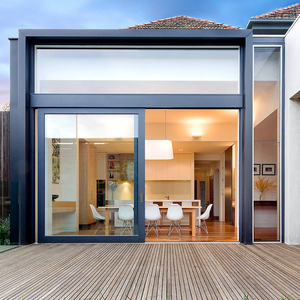
In modern architectural design, the demand for expansive glass openings that bridge interior luxury with outdoor living has driven an unprecedented surge in aluminium bi-fold doors (folding patio doors). As commercial developers, custom home builders, and architectural hardware importers seek optimal balances between structural integrity, thermal efficiency, and cost effectiveness, China has established itself as the world's premier manufacturing hub for advanced fenestration systems.
However, navigating China's industrial ecosystem—specifically concentrated in key hubs such as Foshan, Guangdong—requires a rigorous understanding of metallurgical standards, thermal break technologies, hardware load dynamics, and international building code certifications. This authoritative whitepaper provides technical directors, procurement heads, and structural engineers with the information gain required to select tier-one manufacturing partners, mitigate risk, and execute seamless OEM/ODM procurement strategies.
Technical Superiority in Aluminium Bi-Fold Fabrication
6063-T6 Extrusion Metallurgy
Leading Chinese factories utilize high-grade 6063-T6 aluminum alloys featuring nominal wall thicknesses ranging from 2.0mm to 3.0mm for heavy-duty bi-fold leaf profiles. T6 heat-treated temper ensures superior tensile strength and resistance to deflection under massive wind loads.
Polyamide Thermal Barriers
To prevent energy transfer across metal frames, premier systems integrate PA66GF25 (25% glass fiber reinforced polyamide) thermal break strips. This mechanical barrier drops whole-unit U-factors to under 0.22 BTU/h·ft²·°F (1.25 W/m²K) when paired with Low-E argon-filled insulated glass units.
Multi-Point Lock & Roller Systems
Gliding mechanics require bottom-hung heavy-duty quad-wheels or top-hung concealed carrier hinges rated for up to 400 kg per panel. German-engineered hardware (e.g., Hopo, Siegenia, Roto) coupled with EPDM continuous weather gaskets guarantees anti-burglary protection and zero air leakage.
Bi-Fold Systems vs. Alternative Large-Opening Door Types
| Performance Parameter | Aluminium Bi-Fold Doors | Heavy-Duty Lift & Slide Doors | Concealed Pivot Doors |
|---|---|---|---|
| Maximum Wall Opening % | 90% - 95% Clear Opening | 50% - 65% Clear Opening | 70% - 80% Clear Opening |
| Typical Panel Width Range | 750 mm - 1200 mm | 1500 mm - 3200 mm | 1200 mm - 2500 mm |
| Structural Wind Load (DP Rating) | DP45 - DP65 (Tested up to 3100 Pa) | DP60 - DP90 (Tested up to 4300 Pa) | DP35 - DP50 (Tested up to 2400 Pa) |
| Thermal Insulation (U-Factor Range) | 1.2 - 1.8 W/m²K (Low-E Triple IGU) | 1.0 - 1.5 W/m²K (Low-E Triple IGU) | 1.6 - 2.2 W/m²K (Thermal Break Frame) |
| Air / Water Tightness (Pa) | Class 4 (600 Pa) / 450 Pa Water | Class 4 (600 Pa) / 700 Pa Water | Class 3 (300 Pa) / 300 Pa Water |
| Primary Application Focus | Seamless Indoor-Outdoor Living, Patios | High-Rise Condos, Panoramic Coastal Views | Grand Luxury Entrance Portals |
2025–2030 Global Sourcing Trends in Chinese Aluminium Fenestration
The international procurement landscape for architectural aluminium doors is undergoing structural shifts driven by stringent building energy mandates, minimalist design aesthetics, and digitalized supply chain integration. Overseas buyers sourcing from Chinese manufacturers must prepare for several emerging technological standards:
1. Minimalist Ultra-Slim Sightlines with Structural Glass Bonding
Architectural preference has transitioned from traditional 80mm+ face width profiles toward narrow-frame bi-fold systems featuring visible mullions under 30mm. Achieving structural stability with such slim profiles necessitates direct structural silicone glazing (SSG), where double or triple insulated glass units become load-bearing components of the door sash.
2. Decarbonization & Low-Carbon Aluminium Extrusions
In response to European CBAM (Carbon Border Adjustment Mechanism) and global ESG criteria, premier Chinese aluminum factories are shifting toward hydro-powered or recycled secondary aluminum billets. Selecting suppliers utilizing certified low-carbon extrusion ingots (<4.0 kg CO2/kg Al) is becoming a prerequisite for commercial BREEAM and LEED certified developments.
3. Smart Building Integration & Motorized Automation
Bi-fold systems are no longer purely manual systems. Sourcing trends show a 35% year-over-year increase in demand for concealed, motorized multi-panel folding operators linked to smart home automation platforms (KNX, Zigbee, Crestron). These incorporate pinch-prevention infrared sensors, automated lock actuators, and motorized drop-down weather seals.
4. Stringent Third-Party Compliance & Verification
Leading import jurisdictions enforce stringent performance thresholds. Modern buyers bypass suppliers lacking verifiable laboratory test data. Essential global certifications include North American NFRC (National Fenestration Rating Council) and NAFS (North American Fenestration Standard), Australian AS2047 / AS1288, and European CE / EN 14351-1 standards.
Why Partner with TropiAlu Windows & Doors?
Vertically Integrated Plant
Operating across a 430,000 sq. ft. automated manufacturing footprint in Foshan, Guangdong. From profile precision cutting, CNC milling, corner crimping, to automated double-glazing lines, every phase is controlled in-house under ISO9001 quality management.
Custom OEM & Private-Label Support
Full engineering customization available for project distributors and developers. We support custom profile die extrusions, specialized anodized (up to 25 microns) or Qualicoat Class 2 powder-coated finishes, custom hardware co-branding, and tailored export packaging.
North American Localized Support
To bridge time zones and job-site requirements, localized showrooms and technical liaison points in California and New Jersey deliver 48-hour response windows, shop-drawing approvals, replacement part dispatch, and site installation consulting.
Frequently Asked Sourcing & Engineering Questions
Top-hung bi-fold systems suspend panel weight from the head track, delivering effortless sliding motion and allowing flat flush floor thresholds. However, top-hung systems require heavy structural lintels or header beams to carry full dead-loads (up to 1000 kg across wide spans). Conversely, bottom-rolling systems transfer weight to the floor track, making them ideal for retrofit projects where overhead structural support is limited.
Compliance requires holistic thermal modeling (LBNL THERM/WINDOW software) and physical testing in accredited labs (such as Intertek or CSA). Top manufacturers select PA66GF25 thermal break profiles, warm-edge composite spacers (e.g., Technoform), double or triple Low-E glass with Argon gas fill, and dual-durometer EPDM gaskets. Certified test reports must be provided prior to mass production.
For coastal installations exposed to salt spray (corrosivity class C4/C5), standard powder coating is inadequate. We specify architectural Fluorocarbon PVDF (polyvinylidene fluoride) liquid coatings or Qualicoat Class 3 marine-grade powder coatings. Aluminum profiles should receive a pre-anodized conversion coat, and hardware must utilize grade 316 stainless steel rollers and hinges tested to 1000+ hours neutral salt spray (NSS).
Standard sample or single-villa project orders are accepted (MOQ starting at 1 set for evaluation). For custom OEM profile extrusions requiring custom tooling dies, MOQ is typically 5 Metric Tons of aluminum. Standard production lead time is 25–35 calendar days following shop drawing sign-off and glass procurement.
Export-grade fenestration packaging utilizes multi-layer protection: individual panel shrink wrapping, protective PE foam edge guards, heavy-duty honeycomb cardboard wrapping, and fully enclosed fumigated plywood crates with internal rubber shock absorbers. Units are clearly labeled by building elevation and opening number to facilitate orderly site distribution.
Reputable manufacturers issue a formal Quality Assurance Dossier including 100% dry-fit assembly testing photos/videos, coating thickness gauge readouts (ISO 2360), glass seal inspection, and hardware torque checks. Furthermore, factory acceptance testing (FAT) via third-party inspection firms (e.g., SGS, Bureau Veritas, TUV) or live video audits before container loading is welcomed.