Premier Window & Door Export Selection
Engineered for High Thermal Efficiency, Hurricane Resistance, and Structural Precision
Understanding Aluminum Clad Wood Fenestration Engineering
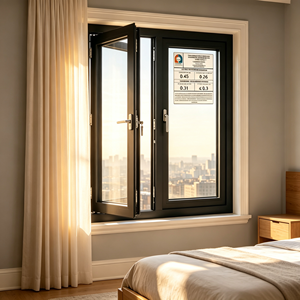
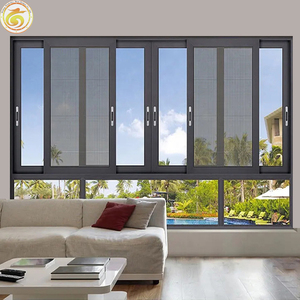
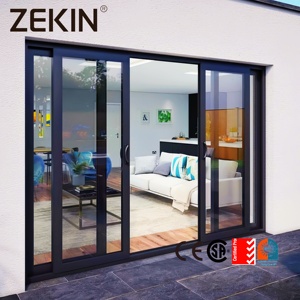
In modern architectural engineering, Aluminum Clad Wood Windows represent the pinnacle of thermal efficiency, structural resilience, and aesthetic elegance. By uniting exterior-grade structural extruded aluminum (6063-T6 alloy) with interior architectural timber (such as solid Northern Red Oak, Larch, Pine, or Teak), clad window systems resolve the historically conflicting demands of extreme weather durability and warm interior biophilic design.
For international buyers, contractors, developers, and private-label brands sourcing from China, evaluating standard aluminum windows versus true architectural-grade aluminum clad timber systems requires looking closely at three critical technical factors:
Extrusion & Material Hybridization
The exterior aluminum shell acts as a maintenance-free shield against UV radiation, extreme temperature fluctuations, and heavy rain. The interior wood core provides natural thermal insulation, cutting down heat transfer coefficients (U-factors) to levels unachievable by standard un-insulated metal frames.
PA66-GF25 Thermal Break Barriers
Superior clad systems use precision nylon-polyamide clips (PA66 reinforced with 25% fiberglass) to join the exterior aluminum cladding with the interior wood frame. This flexible mechanical connection allows the metal and wood to expand and contract independently without warping or seal breakdown.
Advanced Surface Finishing
Exterior extrusions undergo high-durability surface treatments, including AAMA 2605 compliant PVDF fluorocarbon (Kynar 500) powder coating or Class I anodizing. These finishes protect against salt spray corrosion in harsh coastal conditions for over 30 years.
Engineering Benchmark: Clad Systems vs. Standard Aluminum
To help procurement teams make informed decisions for North American and European projects, the table below breaks down key performance metrics evaluated during compliance reviews:
| Performance Metric | Standard Non-Thermal Aluminum | Thermal Break Aluminum | Aluminum Clad Wood Systems |
|---|---|---|---|
| U-Factor (Btu/h·ft²·°F) | 0.80 – 1.10 (Poor thermal isolation) | 0.28 – 0.40 (Energy Star Compliant) | 0.12 – 0.22 (Passive House Standard) |
| Condensation Resistance (CRI) | Low (15 – 25) | Moderate (45 – 60) | High (70 – 85+) |
| Acoustic Isolation (STC / OITC) | STC 22 – 26 (High sound transmission) | STC 32 – 38 (Standard urban isolation) | STC 42 – 48+ (Superior noise reduction) |
| Structural Wind Load (DP Rating) | DP 30 – DP 45 | DP 50 – DP 70 | DP 70 – DP 100+ (Impact Rated / Coastal) |
| Interior Aesthetic Versatility | Painted/Anodized Metal Only | Painted Metal / Simulated Grain | Authentic Hardwood (Oak/Teak/Pine Staining) |
| Expected Service Life | 15 – 20 Years | 25 – 30 Years | 40+ Years (With Replaceable Exterior Cladding) |
Future Sourcing Trends in B2B Window Procurement
As international energy codes become stricter (such as California's Title 24, IECC 2024 updates, and European EPBD standards), architectural procurement strategies are shifting rapidly. Overseas buyers must adapt to four main market drivers:
1. Triple & Quadruple Low-E Glazing Packages
Standard double-pane IGUs are quickly being replaced by warm-edge triple glazing filled with 90%+ Argon or Krypton gas. Leading Chinese export manufacturers now integrate soft-coat Low-E layers with ultra-thin warm-edge spacers (like Swisspacer or Technoform), reaching whole-window U-factors below 0.15 for ultra-low energy builds.
2. Hurricane & Impact-Resistant Engineering
Due to severe climate events, demand for Miami-Dade NOA (Notice of Acceptance) and Florida Product Approval certified windows is growing beyond coastal regions. Sourcing partners require heavy laminated glass interlayers (SGP / PVB) paired with reinforced structural aluminum framing engineered to withstand large missile impacts (ASTM E1996 / E1886).
3. Automated Micro-Ventilation & Smart Actuators
Modern luxury homes and commercial facades increasingly specify hidden motorized chain actuators and smart sensors. Windows now automatically open or close based on indoor CO₂ levels, rain detection, or smart home commands, fully integrated into concealed multipoint locks.
4. Digital Twin BIM Integration & Supply Transparency
B2B developers demand BIM (Revit) objects early in the design process to run energy simulations accurately. Factory transparency, including mill test certificates for 6063-T6 aluminum alloys and FSC-certified timber sourcing, has become essential for successful project submittals.
Why Sourcing Professionals Partner with TropiAlu
For nearly two decades, TropiAlu Windows & Doors Manufacturing Co., Ltd. has served as a trusted direct factory supplier for North American, Australian, and European developers, general contractors, and private-label distributors.
430,000 Sq. Ft. Manufacturing Base
Our expansive production facility houses fully automated Italian CNC double-head cutting saws, automated corner-crimping machines, and precision glass lamination lines. This vertical integration guarantees tight tolerances within ±0.5mm across high-volume production orders.
Global Certification & Compliance
Our system designs undergo rigorous testing by accredited third-party laboratories. Selected lines feature documentation for NFRC, CSA, Energy Star, Intertek, NAFS (North American Fenestration Standard), AS2047, and Miami-Dade NOA.
U.S. Showrooms & 48h Response
To reduce overseas sourcing risk, we operate local showroom locations in California and New Jersey. North American clients can review hardware samples and operate full-scale mockups locally, backed by a dedicated 48-hour engineering support team.
Frequently Asked Questions by Overseas Buyers
Essential guidance on custom specs, shipping protection, compliance testing, and OEM programs
Ready to Engineer Your Project's Window Package?
Send your architectural elevation drawings or window schedules today. Our engineering team will deliver a comprehensive proposal, complete with thermal analysis, structural ratings, and factory-direct pricing within 24 to 48 hours.