Commercial & Architectural Sliding Door Solutions
Factory-direct, engineered aluminum sliding systems rigorously tested for energy efficiency, hurricane resistance, and modern acoustic performance.
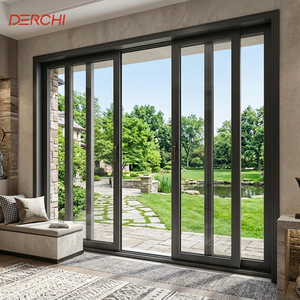
DERCHI Multi Panel Aluminum Sliding Door Security Hurricane Proof Patio Door
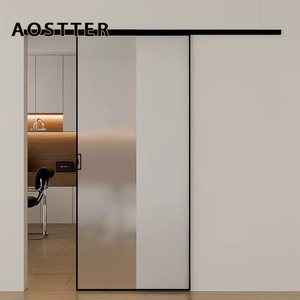
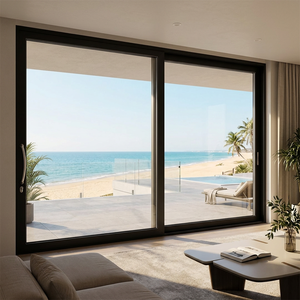
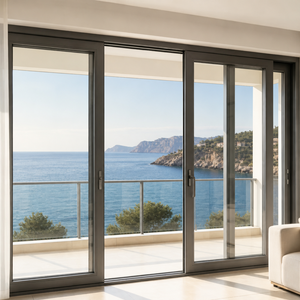
Heavy Duty Double Glass Thermal Break Lift and Slide Outdoor Patio Doors
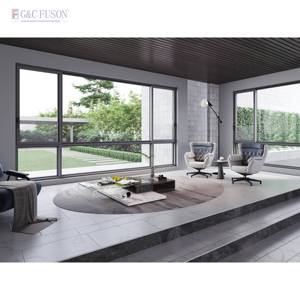
Fuson Black Steel Mesh Aluminum Balcony Louvre Sliding Door & Window System
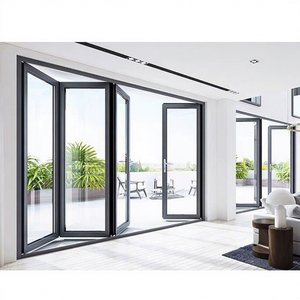
APRO NFRC Certified Aluminium Glass Accordion Bi-Fold Patio Doors
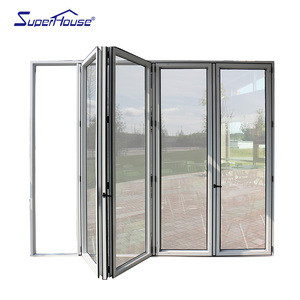
Superhouse Commercial Exterior Glass Accordion Stacker Folding Doors
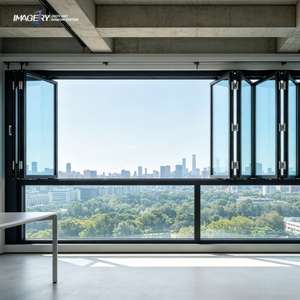
Modern Soundproof Aluminum Double Glazed Bifold Window & Servery Systems
1. Executive Procurement Analysis: The Chinese Aluminium Fenestration Hub
The global demand for high-performance exterior architectural fenestration has established Foshan and the broader Guangdong province in China as the primary hub for custom thermal-break aluminium sliding door systems. Commercial real estate developers, facade contractors, and regional building material wholesalers require more than baseline pricing when sourcing across international borders; they require robust metallurgical guarantees, thermal compliance, structural design pressures, and supply chain predictability.
Understanding the engineering nuances between localized extrusions and international performance standard compliance allows purchasing managers to optimize procurement budgets while eliminating project risk. The modern sliding door is no longer a simple structural divider; it is an engineered energy barrier that must resist localized wind loads, maintain airtightness under driving rain, and seamlessly integrate into modern smart home automation systems.
Core Procurement Rule: When sourcing wholesale aluminium sliding doors from Chinese OEMs, direct performance evaluation must prioritize Whole-Unit U-Factors (ANSI/NFRC 100), Solar Heat Gain Coefficients (SHGC), and Structural Design Pressure (DP) ratings over basic raw profile wall thickness.
2. Structural Metallurgy & Extrusion Chemistry Benchmarks
At the center of high-durability sliding door systems is profile metallurgy. Leading Chinese manufacturers, such as TropiAlu, utilize primary 6063-T5 and 6063-T6 billet aluminum alloys. The physical performance of the sliding door frame—especially under dynamic wind pressures in high-rise coastal developments—is directly governed by the heat treatment (temper) and alloy composition.
6063-T5 vs. 6063-T6 Alloys
T5 temper offers an ultimate tensile strength of ≥180 MPa, making it ideal for intricate slim-frame profiles. T6 temper boosts tensile strength to ≥205 MPa, necessary for heavy-duty structural commercial stacker doors.
Polyamide PA66-GF25 Breaks
Thermal separation is achieved via imported Polyamide PA66 reinforced with 25% glass fiber. This guarantees an identical coefficient of thermal expansion to aluminum, preventing structural delamination.
Fluorocarbon PVDF Coatings
AAMA 2605 compliant PVDF fluorocarbon coatings provide 10-25 year color retention guarantees under extreme UV exposure and marine environment salt spray conditions (ASTM B117 tested).
3. Product Engineering & Architectural Innovation Trends
Architectural preferences for residential and mixed-use commercial projects have evolved rapidly towards expansive glass areas, minimal sightlines, and zero-threshold transitions. As a result, Chinese wholesale factories have re-engineered classical sliding door mechanics to accommodate heavy double and triple insulated glass units (IGUs) weighing upwards of 400 kg per sash.
A. Lift-and-Slide Hardware Systems
Standard inline sliding doors rely on continuous weather-strip contact, creating high operational friction. Modern heavy-duty systems employ German-engineered Lift-and-Slide hardware (G-U, Siegenia, or Hoppe). When the handle is rotated 180 degrees, internal gear drives lift the entire sash off the stainless steel track by 5mm to 8mm, allowing massive sashes to glide effortlessly. Upon closing, the sash drops down to compress high-grade EPDM gaskets against the frame, achieving air permeability ratings compliant with NAFS Class CW/AW specifications.
B. Minimalist "Ghost Track" & Narrow Sightline Systems
Ultra-slim profile designs reduce visible interlock widths down to 16mm–21mm. These systems shift structural loads into vertical stiles reinforced with internal carbon steel or specialized alloy stiffeners. For interior villa applications and luxury master suites, top-hung "Ghost Track" hardware conceals running gears completely within the header or frame, eliminating floor tracks entirely for seamless floor-to-ceiling transitions.
C. Hurricane Impact & Cyclic Pressure Resistance
For hurricane-prone regions such as Florida, the Caribbean, and coastal Australia, export manufacturers build heavy-impact sliding doors featuring laminated insulated glass packages (e.g., 6mm Toughened + 1.52mm PVB/SGP + 6mm Toughened). These assemblies undergo ASTM E1886 and ASTM E1996 testing, resisting 9-pound 2x4 timber impacts at 50 feet per second, followed by 9,000 cycles of positive and negative pressure loading.
4. Industry Technical Evaluation Matrix
To assist architects, structural engineers, and sourcing directors in writing accurate technical specifications, the matrix below outlines engineering benchmarks across key wholesale aluminium sliding door categories:
| Door System Category | Thermal U-Factor Range | Max Glass Thickness | Structural DP Rating | Ideal B2B Application |
|---|---|---|---|---|
| Slim-Frame Minimalist Sliding | 1.6 – 2.0 W/m²K (U 0.28-0.35) | 28mm Double Glazed | DP35 – DP50 | Luxury Residential, Interior Partitions |
| Heavy-Duty Lift & Slide | 1.0 – 1.4 W/m²K (U 0.18-0.25) | 42mm Triple Glazed / Low-E | DP60 – DP85 | High-End Villas, Cold Climates |
| Hurricane Impact Sliding | 1.8 – 2.2 W/m²K (U 0.32-0.38) | 38mm Laminated IGU | DP70 – DP100 (HVHZ) | Coastal Commercial & Residential |
| Multi-Track Stacker / Bi-Fold | 1.4 – 1.8 W/m²K (U 0.25-0.32) | 32mm Double Low-E | DP45 – DP60 | Patio Expansions, Hospitality Venues |
5. Global Procurement Trends & Sourcing Risk Mitigation (2025–2030)
Sourcing direct from manufacturers in China requires strict adherence to project timelines, standardized testing validation, and shipping container optimization. Forward-thinking wholesalers are moving away from spot-market trading companies and partnering directly with vertically integrated OEMs that possess end-to-end extrusion, anodizing, glass fabrication, and assembly capabilities.
Key Trends Shaping Sourcing Decisions:
- Low-Carbon Recycled Aluminum: With Europe's Carbon Border Adjustment Mechanism (CBAM) and US LEED v4.1 standards, top factories now provide Environmental Product Declarations (EPDs) using hydroelectric-smelted low-carbon primary aluminum billets.
- Unitized & Pre-Glazed Delivery: To reduce expensive job-site labor costs in North America and Australia, windows and sliding doors are factory-glazed, fully assembled, and ship in customized A-frame steel crates labeled by building elevation.
- Dual-Showroom Local Support Models: Enterprise manufacturers like TropiAlu establish local logistical and showroom hubs in key overseas markets (such as California and New Jersey) to provide 48-hour technical response times and physical sample evaluation prior to full production runs.
6. Factory Advantage: The TropiAlu Manufacturing Standard
With nearly 20 years of fenestration engineering expertise, TropiAlu Windows & Doors Manufacturing Co., Ltd. operates a state-of-the-art 430,000 sq ft production facility equipped with high-precision CNC machining centers, automated thermal break insertion lines, and automated double-glazing lines. Having successfully executed over 10,000 architectural projects globally, TropiAlu serves as a strategic OEM partner for private label brands, real estate developers, and global distributors.
Every custom sliding door order undergoes a multi-point quality assurance protocol, including raw material spectrographic analysis, corner crimping pull-tests, EPDM gasket weathering checks, and full unit mock-up water penetration testing according to ASTM E331 standards prior to final export crating.
Require Technical Drawings or Factory Direct Quotations?
Consult with our senior structural engineers to review opening schedules, thermal calculations, and custom OEM manufacturing protocols.
Send an Inquiry7. Frequently Asked Questions (FAQ) for B2B Sourcing Managers
Do your wholesale aluminium sliding doors meet North American building codes?
Yes. Selected thermal-break aluminum sliding door series are engineered to meet NFRC (National Fenestration Rating Council), NAFS (North American Fenestration Standard), CSA, and ENERGY STAR guidelines. Complete laboratory test reports for U-factor, SHGC, air infiltration, and structural water resistance are provided during shop drawing submittals.
What is the lead time for custom wholesale orders from China?
Standard lead times for shop drawing approval, extrusion preparation, powder coating/PVDF finishing, glazing, and assembly range between 25 to 35 business days depending on order volume and custom profile complexity. Sea freight transit times typically add 14–25 days depending on the destination port.
How do you ensure zero glass damage during international container shipping?
Units are packed using a heavy-duty export protection protocol: protective plastic film wrapped sashes, shock-absorbing rubber corner guards, high-density foam padding, and fully enclosed OSB plywood or customized steel A-frame crates. Crates are forklift-ready and secured inside shipping containers using heavy-duty webbing and bracing.
Can TropiAlu provide private-label OEM branding for regional distributors?
Yes. We offer comprehensive OEM programs including custom laser-etched hardware logos, branded protective film, customized installation manuals, branded packaging, and technical submittal packages prepared under your distributor brand identity.
What thermal break technology is used in your heavy-duty sliding patio doors?
We utilize precision Polyamide PA66-GF25 (25% glass fiber reinforced) structural thermal barrier strips. Compared to cheaper pour-and-debridge polyurethane insulation, PA66 strips provide vastly superior structural integrity, shear resistance, and long-term dimensional stability under severe temperature differentials.
What hardware brands are integrated into your sliding door assemblies?
We offer premium German hardware options, including G-U (Gretsch-Unitas), Siegenia-Aubi, and Hoppe, as well as top-tier custom domestic hardware ranges tested to 50,000+ cycle durability runs with multi-point locking mechanisms for maximum security against forced entry.
How can we visit your production facility or review physical samples locally?
Clients are welcome to tour our 430,000 sq ft manufacturing plant in Foshan, China. For North American clients who prefer local review, physical sample systems, corner mock-ups, and operative doors can be inspected at our factory branch showrooms located in California and New Jersey.
Initiate Your Wholesale Sourcing Project Today
Partner with an established China aluminium sliding doors manufacturer. Contact our engineering team for instant project estimates, sample requests, and technical specifications.
Send an Inquiry