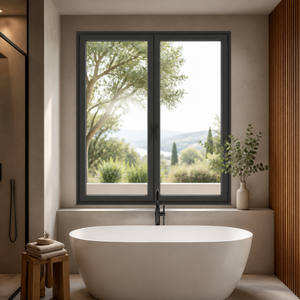
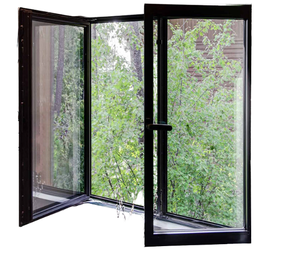
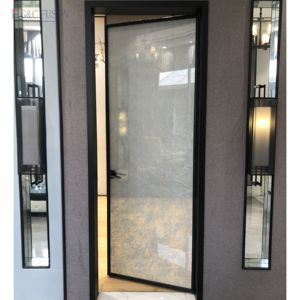
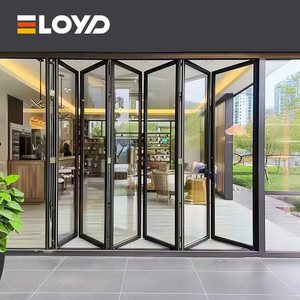
Featured OEM Aluminum Windows & Glass Door Systems
Engineered to meet stringent international building standards including NFRC, NAFS, CSA, and ENERGY STAR benchmarks.
Why Top Developers & Private-Label Brands Partner With Us
Bridging high-capacity OEM/ODM aluminum fabrication with North American & European compliance standards.
In-House Manufacturing Ecosystem
Operating a massive 430,000 sq ft production facility in Foshan, Guangdong, we control 100% of the manufacturing value chain—from 6063-T6 aluminum extrusion, polyamide thermal breaking, automated glass unit assembly, to multi-point hardware installation and final pressure testing.
Global Certification Compliance
Our custom window and door systems are precision-engineered to meet demanding building energy codes. Selected product series possess full testing reports for NFRC (U-factor & SHGC), NAFS (AAMA/WDMA/CSA 101/I.S.2/A440), Intertek, ENERGY STAR, and Australian AS2047 standards.
North American Local Support
To eliminate overseas sourcing friction, we maintain physical product showrooms and dedicated technical support hubs in California and New Jersey. Our local field engineering teams provide 48-hour response times for shop drawings, site measurements, and installation support.
Engineering Principles of Modern OEM Aluminum Glass Systems
An architectural and metallurgical breakdown of thermal dynamics, glass technology, structural loads, and acoustic isolation.
1. Structural Metallurgy & Profile Extrusion Dynamics
Aluminum is the material of choice for high-rise commercial facades and contemporary residential fenestration due to its unmatched strength-to-weight ratio and corrosion resistance. However, raw aluminum possesses high thermal conductivity ($\approx 200 \text{ W/m}\cdot\text{K}$). To meet modern green building energy codes such as IECC 2024 and California Title 24, window profiles must undergo structural thermal isolation.
Our OEM factory utilizes primary-grade 6063-T6 architectural aluminum alloy. Through precision T6 heat treatment, the tensile strength reaches a minimum of $205 \text{ MPa}$, allowing profiles to withstand extreme design pressure (DP) ratings up to DP100 without permanent structural deformation. Wall thicknesses are engineered between $1.4\text{mm}$ for residential sashes to $3.0\text{mm}$ for high-load commercial lift-and-slide doors and curtain wall mullions.
2. Thermal Break Mechanics: Polyamide Strip Technology
To interrupt heat transfer across the metal frame, our thermal-break series incorporate Technoform PA66 GF25 polyamide strips (25% glass fiber reinforced). Unlike cheap PVC extrusions which degrade under solar UV radiation and exhibit linear thermal expansion misalignments, PA66 GF25 matches the coefficient of thermal expansion of aluminum ($\approx 2.3 \times 10^{-5}/\text{K}$).
| Thermal Barrier Material | Thermal Conductivity ($\text{W/m}\cdot\text{K}$) | Tensile Strength ($\text{MPa}$) | UV & Heat Resistance | Structural Lifespan |
|---|---|---|---|---|
| PA66 GF25 Polyamide (Our Standard) | 0.30 | ≥ 80 | Exceptional (> 220°C Melting) | 50+ Years |
| PVC Extrusions (Generic Low-Cost) | 0.17 | ≤ 40 | Poor (Warps at > 70°C) | 5–10 Years |
| Non-Thermal Solid Aluminum | 200.00 | 205 | N/A | 50+ Years |
By engineering multi-cavity thermal break zones filled with high-density polyurethane (PU) insulation foam, frame U-factors are drastically reduced down to $\le 1.4 \text{ W/m}^2\cdot\text{K}$ ($\approx \text{U-0.24 Btu/h}\cdot\text{ft}^2\cdot^\circ\text{F}$), preventing interior surface condensation even when external temperatures drop to $-30^\circ\text{C}$.
3. Advanced Glazing Science & Spectral Selectivity
Glass constitutes over 85% of a window opening’s surface area. Therefore, solar heat gain coefficient (SHGC) and light-to-solar gain (LSG) ratios are governed by the insulated glass unit (IGU) configuration. Our OEM production lines offer custom double-pane and triple-pane IGUs integrated with soft-coat Low-E magnetron sputter vacuum deposition (MSVD) technology.
Double Low-E Argon Filled IGU
Configuration: 6mm Low-E Tempered + 12Ar (Warm Edge) + 6mm Clear Tempered.
Performance: U-Factor: $0.26 \text{ Btu/h}\cdot\text{ft}^2\cdot^\circ\text{F}$ | SHGC: $0.22 - 0.40$ | Visible Light Transmittance (VLT): $68\%$.
Optimal For: Mixed climates demanding solar radiation block during summer while retaining interior thermal comfort during winter.
Passive House Triple Low-E IGU
Configuration: 5mm Low-E + 12Ar + 5mm Clear + 12Ar + 5mm Low-E.
Performance: U-Factor: $0.15 \text{ Btu/h}\cdot\text{ft}^2\cdot^\circ\text{F}$ | SHGC: $0.18 - 0.28$ | Sound Transmission Class: STC 42.
Optimal For: Cold northern climates (US Zone 5-7, Canada, Northern Europe) and net-zero carbon building developments.
4. Hurricane Impact Resistance & Acoustic Attenuation
For coastal developments prone to tropical cyclones and coastal storms (e.g., Florida High Velocity Hurricane Zones - HVHZ), standard glass units fail under wind-borne debris pressure. Our custom OEM hurricane-proof series utilize structural laminated glass incorporating Dupont SentryGlas® Plus (SGP) or Solutia PVB interlayers sandwiched between tempered glass lites.
When impacted by a $9\text{-lb } 2 \times 4$ timber missile fired at $50 \text{ ft/s}$ (ASTM E1996 Large Missile Level D test), the laminated unit flexes without shattering or breaching the building envelope. Furthermore, the viscoelastic damping properties of SGP/PVB interlayers combined with asymmetric glass thickness configurations (e.g., 8mm Outer + 12mm Air Space + 6.76mm Laminated Inner) attenuate ambient environmental noise, achieving high Sound Transmission Class (STC ratings up to 45 dB), blocking heavy traffic and airport noises.
Future Procurement & Market Trends in Architectural Glazing
Key market forces re-shaping how real estate developers, contractors, and architects source aluminum fenestration.
Decarbonization & Embodied Carbon Metrics
Global architectural specifications are rapidly pivoting toward Environmental Product Declarations (EPDs). Procurement teams are demanding low-embodied-carbon aluminum extruded via green hydro-power smelters. Our factory is actively expanding post-consumer recycled aluminum content ($\ge 30\%$), drastically reducing carbon intensity from $18\text{kg CO}_2\text{/kg Al}$ down to $< 4.5\text{kg CO}_2\text{/kg Al}$.
Direct-to-Factory OEM Private Labeling
Traditional regional window distributors face eroding margins due to multi-tiered middleman markups. Mid-to-large-scale contractors are bypassing local middlemen to establish custom private-label window lines direct with Chinese factories. By co-engineering custom extrusion dies and hardware branding, distributors achieve 35–50% cost reductions while holding full product IP.
Smart Building & BMS Actuator Integration
The rise of automated smart home ecosystems and Commercial Building Management Systems (BMS) requires window hardware to evolve. Modern procurement trends show an exponential demand for concealed motorized chain actuators, magnetic lock sensors, and electrochromic dynamic smart glass (PDLC) that adjust solar tint dynamically based on IoT solar sensors.
Evolution of Next-Generation Aluminum Window Design
Breakthroughs in minimalist aesthetics, surface finishing durability, and structural micro-ventilation.
Minimalist Ultra-Slim Sightlines
Modern architectural philosophy favors maximum daylight transmission and unobstructed panoramas. Traditional aluminum sashes featured bulky $80\text{mm} - 100\text{mm}$ visible profile frames. Our newest R&D series feature ultra-slim minimalist profiles with interlock sightlines as narrow as $21\text{mm}$, utilizing concealed outer frames recessed into building masonry to achieve seamless floor-to-ceiling glass integration.
AAMA 2605 Fluorocarbon (PVDF) Surface Coatings
For coastal and high-UV environments, standard powder coatings chalk and fade within 3–5 years. Our factory utilizes high-performance AkzoNobel and PPG Kynar 500® PVDF fluorocarbon coatings meeting the rigorous AAMA 2605 specification. Tested against 10 years of Florida natural weathering exposure, these coatings resist color fading ($\Delta E < 5$), salt spray corrosion (> 4,000 hours), and chemical atmospheric pollutants.
B2B Procurement & Sourcing FAQ
Direct answers regarding compliance, customization, lead times, QA workflow, and shipping logistics.
Accelerate Your Project With Custom Aluminum Glazing Solutions
Whether you are tendering a multi-family commercial development, establishing an OEM private-label window line, or sourcing high-performance thermal break windows for custom residential villas—our engineering team is ready to analyze your architectural plans.
Send an Inquiry