Global Fenestration Benchmark & Market Landscape
An Executive Sourcing Report for Commercial Importers, Real Estate Developers, and Window Wholesalers
The global architectural sector is undergoing a profound structural shift toward high-performance fenestration systems. Driven by stringent decarbonization targets, evolving building energy codes—such as ENERGY STAR® v7.0 in North America, the EU Energy Performance of Buildings Directive (EPBD), and Australia's NCC Section J—the market demand for premier aluminium double glazed windows has surged exponentially. For international wholesalers and procurement directors, identifying top-tier export partners requires looking far beyond basic profile geometry; it demands a deep evaluation of thermal break engineering, structural design pressures (DP), glass coating technologies, and supply chain accountability.
Aluminum profiles have historically been criticized for high thermal conductivity. However, modern precision manufacturing has revolutionized the material through advanced multi-cavity polyamides (PA66GF25), creating robust structural thermal barriers. Today's commercial-grade extruded aluminum double-glazed windows provide unprecedented U-factors, superior solar heat gain coefficients (SHGC), and exceptional resistance to extreme weather events, acoustic pollution, and salt-spray corrosion.
Featured Commercial-Grade Product Portfolio
High-Performance Fenestration Solutions Verified for North American, European, and Australian Structural Codes
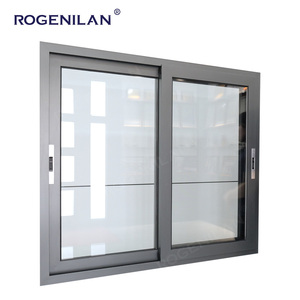
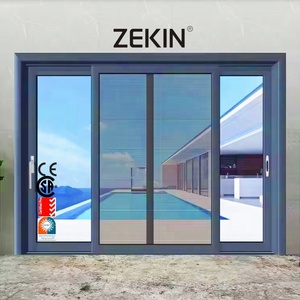
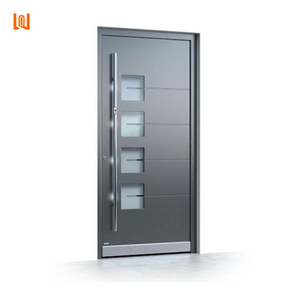
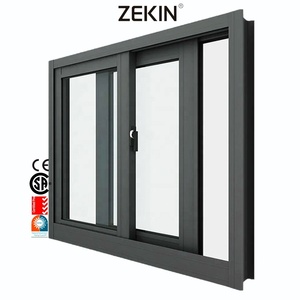
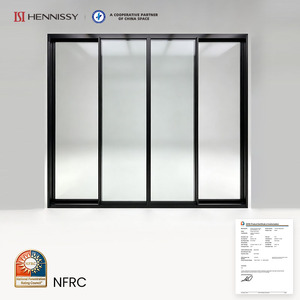
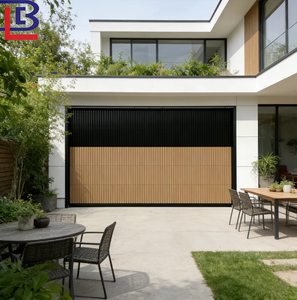
Key Evaluation Criteria for Sourcing Exporters & Wholesalers
A B2B Buying Matrix Designed to Mitigate Supply Chain Risk & Ensure Structural Compliance
When selecting an overseas manufacturing vendor for aluminum double-glazed fenestration, commercial buyers must conduct due diligence across four technical dimensions: metallurgy purity, glass unit seal integrity, compliance certification, and logistical reliability.
Ensure the manufacturer uses virgin 6063-T5 or T6 grade aluminum billet rather than scrap remelt. Extrusions must maintain wall thickness meeting minimum structural norms (≥1.4mm for windows, ≥2.0mm for doors).
Verify valid lab test reports from accredited institutions. Essential standards include NFRC (Thermal), ASTM E283/E330/E331 (Air/Water/Structural), and AS2047 (Australia).
Demand dual-seal IGU technology using primary polyisobutylene (PIB) and secondary structural silicone. Ensure options for Low-E coatings, warm-edge spacers, and 90%+ Argon gas fill ratios.
| Evaluation Parameter | Tier 1 Export Standard | Low-Cost Standard (Risk Area) | B2B Sourcing Value |
|---|---|---|---|
| Thermal Strip Alloy | Polyamide PA66GF25 (25% Glass Fiber) | Recycled PVC / Cheap Plastic | Prevents frame warping, thermal bridge leakage, and premature seal failure. |
| Surface Treatment | Qualicoat Powder / AAMA 2604 / AAMA 2605 Fluoropolymer | Standard Mill Finish or Non-Rated Spray Paint | Guarantees 10-25 years of fade resistance, UV defense, and anti-corrosion. |
| Hardware Systems | German Siegenia / HOPPE / Citing / Custom Heavy Duty | Unbranded Generic Zinc Alloy Hardware | Ensures smoothly operating sash locks over 50,000+ mechanical cycles. |
| Weather Gaskets | Continuous EPDM or Silicone Foam Seals | Standard Thermoplastic Rubber (TPR) | Maintains elasticity under extreme freezing or summer heat conditions. |
Future B2B Procurement & Technical Trends (2025–2030)
Strategic Insights for Wholesale Distributors Planning Portfolio Expansion
As architectural requirements mature, the global fenestration trade is evolving rapidly. Wholesale buyers and major exporters are currently aligning their engineering roadmaps with three core technological shifts:
Modern architecture prioritizes daylight harvest. Next-generation aluminum profiles feature interlocking stile widths down to 20mm–25mm while maintaining wind-load structural resistance through hidden steel or carbon reinforcements.
The integration of VIG into standard double-glazed framing achieves U-values under 0.60 W/m²K (equivalent to solid insulated walls) in a profile thickness previously reserved for standard double glazing.
Motorized lift-and-slide doors and automated awning vents equipped with smart rain sensors, solar PV glass integration, and direct connection to building management systems (BMS) are seeing double-digit annual procurement growth.
Enterprise Advantages: Factory-Direct Manufacturing Scale
Streamlined OEM & Private-Label Manufacturing Tailored for Global Commercial Suppliers
Sourcing direct from an established manufacturing enterprise eliminates multi-tier trading markups, shortens technical communication feedback loops, and grants access to customized profile engineering. TropiAlu Windows & Doors Manufacturing Co., Ltd. serves as an international standard for factory-direct excellence.
Massive automated production capacity incorporating advanced German CNC machining centers, automated glass cutting lines, and dedicated assembly bays capable of fulfilling high-volume developer schedules.
Over two decades of fenestration export experience serving luxury residential estates, commercial office towers, hospitality developments, and medical complexes across North America, Australia, and Europe.
Regional US showroom support locations in California and New Jersey allow North American buyers, architects, and developers to physically inspect profile mockups, test hardware movement, and coordinate logistics in real-time.
Frequently Asked Questions for Overseas Procurement
Clear, Professional Answers Addressing Common Technical & Logistical Sourcing Inquiries
Yes. Selected window and door systems are manufactured and tested to meet NFRC, ENERGY STAR, CSA, and Intertek standards for North America, as well as AS2047 and AS1288 performance benchmarks for the Australian market. Complete test reports and NAFS structural performance ratings are provided during project submittals.
Our high-insulation thermal break casement and sliding series achieve whole-unit U-values ranging from 1.4 to 1.8 W/m²K (0.24 to 0.31 BTU/h-ft²-°F) depending on the glass configuration (such as Low-E coatings, argon gas filling, and warm edge spacers). Custom triple-glazed setups can achieve lower U-values suitable for passive house requirements.
Absolutely. 100% of our orders are built to architect specifications and custom opening dimensions. We offer a full spectrum of surface finishes, including AkzoNobel powder coatings, anodized architectural finishes, wood-grain transfers, and dual-color split frame extrusions.
Export packaging utilizes a multi-layer protective protocol: inner protective film wrap, corner protection guards, high-density foam padding, and fully sealed fumigated plywood crates or rigid steel transport racks. Each unit is individually labeled according to your building elevation schedule for effortless site installation.
We offer complete OEM and ODM private-label partnership programs. This includes customized protective film branding, custom profile extrusion die creation, localized hardware integration, custom packaging design, and co-branded technical documentation support.
Partner with a World-Class Aluminium Window Exporter
Accelerate your project timelines, reduce material costs, and elevate build quality with our certified factory-direct window and door systems. Contact our engineering team today for shop drawings, sample requests, or instant factory quotations.