Featured Export-Grade Aluminium Systems
Precision-engineered thermal break windows, hinged patio doors, bi-fold systems, and minimalist glass walls manufactured to rigorous North American and Australian standards.
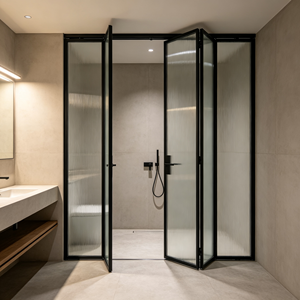
Custom Thermal Break Aluminum Bi-fold Doors for Villa
View Details →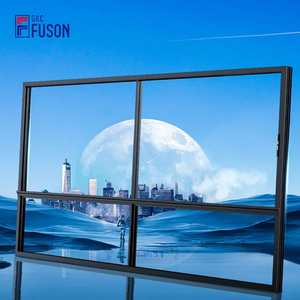
Modern Double Glass Sliding Windows & Balcony Doors
View Details →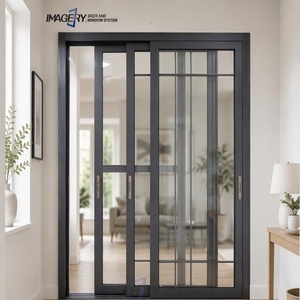
Modern Soundproof Thermal Insulated Sliding Glass Doors
View Details →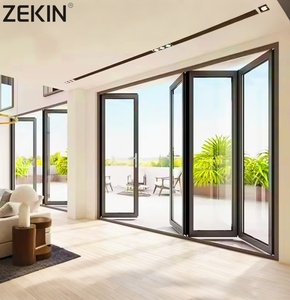
ZEKIN Hurricane Impact Proof Insulated Bi-fold Doors
View Details →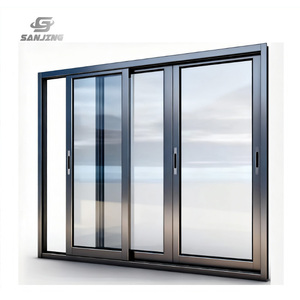
Factory Double Glazed Stainless Steel Sliding Window
View Details →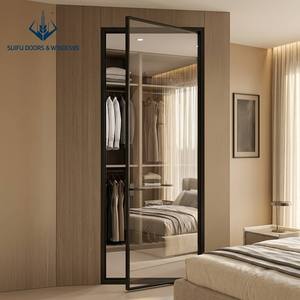
Minimalist Slim Frame Fluted Glass Hinged/Swing Door
View Details →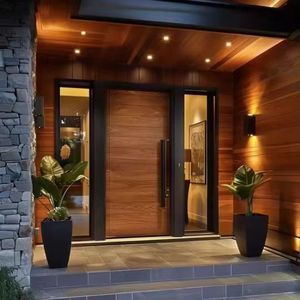
Minimalist Aluminum Pivot Doors & Secure Sliding Windows
View Details →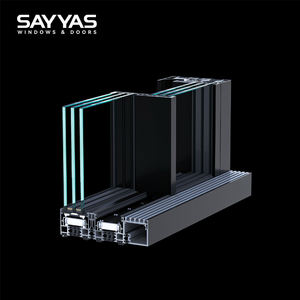
Sayyas JE140 Thermal Break Aluminum Sliding Door
View Details →Evaluating Top Aluminium Hinged Doors Exporters
In commercial and high-end residential architecture, selecting an aluminium hinged door exporter requires navigating complex engineering certifications, structural load tolerances, thermal breaks, and hardware cycling durability.
Architectural hinged doors (casement patio doors, entrance swing doors, and heavy-duty terrace doors) represent critical envelope junctions in modern building design. Unlike sliding systems that distribute weight continuously along a bottom track, hinged doors impose significant localized structural loads on frame jambs, hinges, and lintels. Sourcing from top-tier exporters ensures that profile wall thicknesses, thermal break polyamide joinery, and hardware fixing points withstand both repetitive cyclical force and severe weather exposure.
1. Extrusion Metallurgy & Structural Profile Integrity
Top global exporters utilize primary architectural aluminum alloy 6063-T6 or 6060-T66, strictly controlling magnesium and silicon ratios to achieve superior tensile strength (exceeding 205 MPa) and yield strength (exceeding 170 MPa). Subpar exporters often incorporate recycled secondary aluminum scrap, leading to micro-cracking during deep anodizing or powder coating, and compromised hinge screw retention strength.
2. Advanced Thermal Break Technology (PA66-GF25)
To meet modern building codes such as Energy Star 7.0, NFRC requirements, or Title 24 compliance, architectural doors must prevent conductive heat transfer. Leading exporters integrate precision-extruded PA66 polyamide thermal break strips reinforced with 25% glass fiber. This structural thermal barrier reduces the overall U-factor of aluminium hinged door assemblies down to 0.22 - 0.28 BTU/h·ft²·°F (1.25 - 1.6 W/m²K) when paired with double or triple Low-E insulated glass units (IGUs).
3. Multi-Point Security & Weather Pressure Sealing
Air infiltration and water penetration are primary causes of fenestration failure. Premium export doors incorporate continuous EPDM (Ethylene Propylene Diene Monomer) gasket seals with vulcanized molded corners, working in synergy with 3-point or 5-point mechatronic locking systems. This mechanical compression design achieves water tightness pressure ratings up to 600 Pa (12 psf) and structural design pressures exceeding DP60.
Engineering Benchmark: Tier-1 Exporters vs Standard Suppliers
A clear quantitative comparison of physical specs, thermal ratings, and quality control protocols when evaluating global manufacturers.
| Performance Parameter | Tier-1 Top Exporters (e.g., TropiAlu) | Standard Commercial Suppliers | Architectural Impact |
|---|---|---|---|
| Alloy & Temper | 6063-T6 Primary Aluminium Billet | Secondary / Recycled Alloy Grade | Prevents structural deflection & profile sagging |
| Profile Wall Thickness | 2.0mm - 3.0mm Heavy-Duty | 1.2mm - 1.4mm Light Duty | Ensures heavy door leaf capacity (up to 300kg) |
| Thermal Insulation | PA66-GF25 Technoform Strips | PVC / Low-grade Plastic Infill | High thermal resistance; zero thermal warping |
| Hardware Cycle Test | 100,000+ Cycles (EN 1191 / AAMA) | 15,000 - 25,000 Cycles | Long-term operational reliability & low maintenance |
| Surface Finish Standard | AkzoNobel / PPG Powder (AAMA 2605) | Standard AAMA 2603 Powder | 30-year resistance to salt spray & UV degradation |
| Certification Coverage | NFRC, CSA, ENERGY STAR, NAFS, AS2047 | Uncertified / Factory Internal Test | Guarantees seamless municipal building permit approval |
Why Global Developers Partner with TropiAlu Windows & Doors
Factory-direct manufacturing scale combined with localized North American support creates an ultra-reliable supply chain for commercial contractors, custom builders, and private-label distributors.
430,000 sq ft Manufacturing Base
Our state-of-the-art facility controls every step in-house: profile precision cutting, thermal break insertion, automated CNC machining, double glazing assembly, and rigorous pre-dispatch testing.
Global Compliance & Testing
Engineered specifically for export markets, our systems are supported by NFRC, CSA, ENERGY STAR, Intertek, NAFS, and AS2047 documentation, guaranteeing code compliance across the US, Canada, and Australia.
U.S. Local Showrooms & Support
With physical showrooms in California and New Jersey, North American builders can inspect full-scale mockups in person. Enjoy a guaranteed 48-hour local response for technical submittals and site coordination.
Job-Site Crate Labeling
To minimize site sorting labor, every door and window frame is wrapped in multi-layer protective film, protected by reinforced plywood crating, and labeled by opening/elevation matching your shop drawings.
OEM & Private Label Program
Empowering distributors, dealers, and fenestration brands to expand their catalog with custom profile dies, private-label packaging, custom powder finishes, and tailored architectural documentation.
Over 10,000 Completed Projects
From modern luxury single-family homes in California to multi-family residential complexes in Australia, our export track record spans 20 years of proven durability in diverse climatic conditions.
Future Sourcing & Manufacturing Trends (2025–2030)
How evolving building performance codes, minimalist architecture, and smart manufacturing are transforming the global aluminium hinged door export market.
1. Minimalist Ultra-Slim Sightlines with High Structural Rigidity
Architectural preferences have shifted rapidly toward expansive glass surfaces that maximize natural light and unobstructed views. The next generation of aluminium hinged doors features ultra-slim frame profiles (stile widths under 30mm) integrated with heavy-duty concealed hinges capable of supporting glass panels up to 300 kg (660 lbs). Achieving this slim aesthetic without sacrificing structural integrity requires advanced high-density aluminium alloys and finite element analysis (FEA) engineering during profile design.
2. Passive House Standard Compliance & Vacuum Insulated Glass (VIG)
As global carbon-neutral mandates tighten across North America and Europe, fenestration specs are pushing toward Passive House thresholds (U-factors ≤ 0.8 W/m²K). Top exporters are incorporating Vacuum Insulated Glass (VIG) technology and multi-chambered thermal break profiles filled with aerogel or expanded polyurethane foam (PU). This allows double-pane hinged doors to outperform legacy triple-pane units while dramatically reducing total panel weight and frame depth.
3. Mechatronic Smart Access & Biometric Integration
Modern luxury entry hinged doors are no longer purely mechanical barriers. Procurement specifications increasingly demand factory-integrated mechatronic multi-point locks that sync with smart home automation platforms. Keyless access technologies—such as flush-mounted biometric fingerprint scanners, facial recognition cameras, RFID proximity sensors, and remote smartphone control—are now integrated directly into the door profile during manufacturing, requiring clean concealed wiring channels within the thermal break.
4. Carbon Footprint Transparency & EPD Certification
Institutional developers and green building standard certifications (LEED, BREEAM, WELL) now mandate Environmental Product Declarations (EPDs). Leading exporters are transitioning to low-carbon hydro-powered primary aluminum billets and implementing closed-loop scrap recycling within their extrusion plants, lowering embodied carbon emissions by up to 65% compared to traditional coal-powered smelting.
Global Sourcing Checklist for Hinged Door Packages
Follow this structured engineering checklist to eliminate specification errors, customs delays, and installation bottlenecks when importing high-volume fenestration packages.
- Step 1: Structural & Wind Load Verification: Calculate local ultimate wind speed (V_ult) and exposure category per ASCE 7 / IBC standards. Ensure the exporter provides certified NAFS structural test reports confirming Design Pressure (DP) ratings that meet or exceed site requirements.
- Step 2: Thermal & Condensation Analysis: Request whole-unit NFRC simulation reports (U-factor, SHGC, and Condensation Resistance index) for the exact glass thickness and coating specified, rather than relying on center-of-glass values.
- Step 3: Hardware Compatibility & Salt Spray Class: Verify hardware brand origins (e.g., German Siegenia, HOPPE, GU, or certified proprietary multi-point locks). Ensure stainless steel components meet 316-grade standards for coastal projects exposed to high salinity.
- Step 4: Shop Drawing Sign-Off Protocol: Review detailed CAD cross-sections confirming rough opening tolerances, frame depth, flashing fin locations, threshold drainage weep-holes, and interior/exterior finish match.
- Step 5: Pre-Shipment Factory Acceptance Testing (FAT): Require video verification or third-party inspection covering operational torque, multi-point lock alignment, corner seam tightness, and protective crating.
Frequently Asked Questions for Overseas Buyers
Answers to common technical, compliance, and logistical inquiries raised by architects, general contractors, and import distributors.
Do your aluminium hinged doors meet North American building codes?
What thermal break technology is used in TropiAlu hinged doors?
Can you produce custom sizes, colors, and opening configurations?
How do you support OEM and private-label partners?
What is the typical lead time for custom export orders?
How are heavy glass doors protected during ocean freight transit?
Is there local project coordination support in the United States?
What warranties apply to export aluminium hinged door systems?
Plan Your Next Architectural Project with Confidence
Submit your opening schedule, architectural drawings, or custom OEM requirements. Our fenestration engineers will provide shop drawings, thermal calculations, and factory-direct pricing within 24 hours.
Inquire Now