Featured Architectural Aluminium Windows & Doors Systems
Engineered for North American and European structural codes, offering NFRC thermal performance, AS2047 compliance, and hurricane impact resilience.
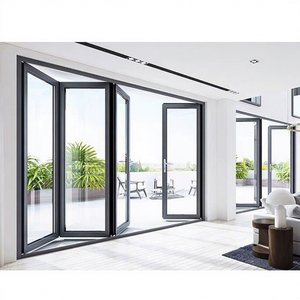
APRO NFRC Certificate Aluminium Bi-Fold Glass Patio Door
Heavy-duty thermal break profile engineered with smooth accordion folding track and low-E tempered double glazing.
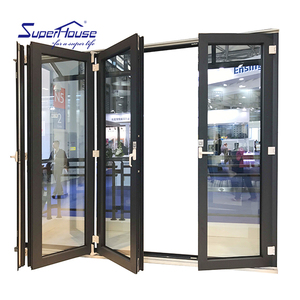
Superhouse Thermal Break Double Tempered Glass Bifold Door
High-insulation exterior folding entry system designed for extreme temperature resistance and seamless indoor-outdoor transition.
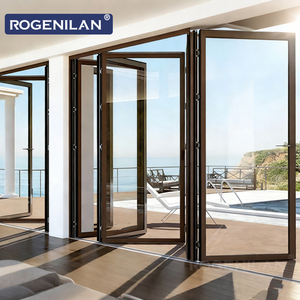
Rogenilan Modern Waterproof Storm Aluminum Accordion Door
Commercial-grade rainproof seal system with reinforced corner joins and dual-layer EPDM rubber gaskets.
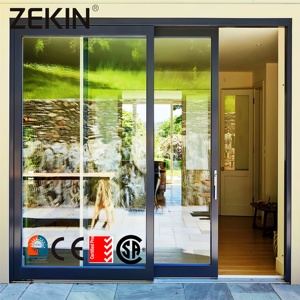
Customized Hurricane Impact Proof Double Tempered Glass Sliding Door
High wind-load structural design suitable for coastal zones, featuring heavy-gauge extruded alloy profiles and multi-point locks.
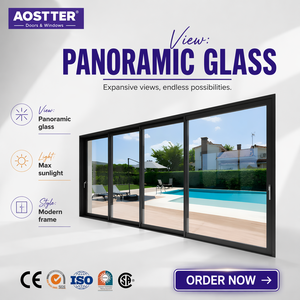
AOSTTER NOA NFRC Sound Insulated Double Glazed Sliding Door
Acoustic-dampened thermal barrier patio sliding system verified under North American fenestration standards.
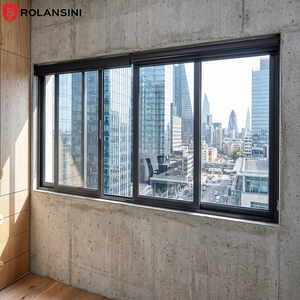
Rolansini AS2047 Certified Slim Soundproof Aluminium Sliding Window
Ultra-narrow sightline framing engineered for maximum daylight yield and optimized acoustic transmission reduction (STC rating).
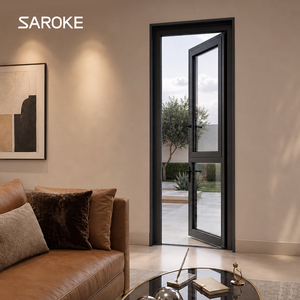
American Standard Thermal Break Metal Patio Exterior Windows & Doors
Architectural black fluoropolymer coated profiles matching modern residential and commercial design blueprints.
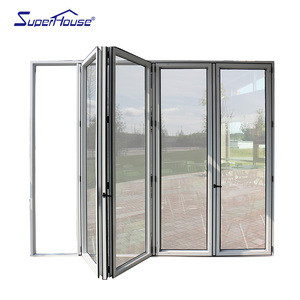
Superhouse Commercial Glass Accordion Patio Stacker Bi-Folding Door
Heavy-duty hardware carriage mechanisms accommodating wide spans for hotel, restaurant, and luxury residential projects.
Evaluating Top 10 Aluminium Louvre Windows Manufacturers & Exporters
In high-performance architectural design, the louver window (also written as louvre window) has evolved from a basic ventilation fixture into a highly specialized envelope component capable of regulating dynamic airflow, solar heat gain, acoustic attenuation, and structural wind pressure. Sourcing from top-tier global manufacturers requires an understanding of profile alloy metallurgy, thermal break integration, precision gear-drive actuation mechanisms, and international fenestration testing compliance (including AAMA, NFRC, NAFS, and AS2047).
This technical procurement guide examines the critical engineering metrics that separate tier-1 global louver manufacturers from general fabricators. Whether specifying motorization-ready louver banks for commercial facade integration or hurricane-impact glass louver assemblies for coastal resorts, institutional buyers must evaluate suppliers against rigorous metallurgical, mechanical, and logistical benchmarks.
Technical Evaluation Framework: Top 10 Manufacturers Benchmarks
When auditing global B2B exporters for large-scale louver window procurement, procurement officers should analyze suppliers across four core architectural criteria: profile structural strength, water tightness performance, surface finish durability, and thermal break engineering.
| Evaluation Pillar | Tier-1 Exporter Standard (TropiAlu Grade) | Standard Market Grade | Engineering Impact |
|---|---|---|---|
| Profile Extrusion Alloy | 6063-T6 / 6005A-T6 Aluminium Alloy | Recycled 6063-T5 Alloy | Yield strength increase of >35%, preventing blade deflection under DP60 wind loads. |
| Surface Treatment | AAMA 2605 Fluoropolymer (PVDF) / 25μm Anodized | Standard Powder Coating (AAMA 2603) | 30-year resistance to UV chalking, salt spray corrosion (ISO 9227 > 3000h), and color fading. |
| Thermal Barrier Tech | PA66-GF25 Polyamide Strut Insertion | Direct Aluminium Bridging / Pour & Debridge | Reduces whole-unit U-factor down to 1.8 W/m²K, preventing interior condensation bridge. |
| Actuation Mechanisms | Rack-and-Pinion / Concealed Linear Motorization | External Plastic Friction Clips | Lifecycle endurance test exceeds 50,000 continuous open/close cycles without torque loss. |
| Water Penetration | Interlocking Blade Seals > 450 Pa Test Rating | Gravity Flush Seals < 150 Pa | Zero water penetration during high-velocity storm events (equivalent to 110 mph driving rain). |
Enterprise Superiority: TropiAlu Windows & Doors Infrastructure
TropiAlu Windows & Doors Manufacturing Co., Ltd. operates as a premiere China-based OEM/ODM manufacturing force, controlling an expansive 430,000 sq ft smart production base in Foshan, Guangdong. Over nearly two decades of continuous innovation, TropiAlu has successfully exported high-precision aluminum louver windows, thermal break window packages, and structural glazing assemblies to over 10,000 residential, commercial, and hospitality projects globally.
Full In-House Industrial Process
Unlike trading houses or small assemblers, TropiAlu conducts aluminum billet extrusion, thermal-break polyamide insertion, CNC profile milling, glass tempering/insulating, and final hardware mounting under one automated quality management regime (ISO 9001 certified).
Rigorous International Certifications
TropiAlu fenestration lines are tested and accredited under major global standards, including NFRC (National Fenestration Rating Council), NAFS (North American Fenestration Standard), ENERGY STAR, Intertek, CSA, and Australia’s AS2047 structural code.
North American Localized Support Nodes
To bridge global manufacturing efficiency with on-site accountability, TropiAlu operates dedicated physical showrooms and technical service hubs in California and New Jersey, guaranteeing a strict 48-hour SLA response time for site queries and CAD approvals.
Future Procurement Trends of Aluminium Louvre Systems
The global market for architectural louver systems is experiencing a paradigm shift driven by stringent decarbonization codes, green building mandates (such as LEED v4.1 and BREEAM), and the integration of smart building automation. Developers, general contractors, and curtain wall fabricators must align their procurement strategies with four key emerging macro trends:
1. Smart BMS Motorization & Climate Sensing
Static manual louver levers are rapidly being replaced by 24V DC actuator-driven motorized louver banks. These automated louvers sync directly with Building Management Systems (BMS), modulating blade angles based on real-time solar tracking, wind velocity, indoor CO₂ thresholds, and ambient rainfall sensors.
2. Thermal Break Structural Aerodynamics
Historically, louver windows were excluded from cold-climate energy envelopes due to thermal bridging. Modern procurement demands dual-extrusion thermal-break louver frames paired with low-E insulated glass louvers or polyurethane foam-injected aluminum aerofoil blades, meeting net-zero building envelope specifications.
3. Pre-Assembled Unitized Window Modules
To mitigate high job-site labor costs in North America and Australia, project developers are shifting toward factory-glazed, fully unitized louver and window sub-assemblies. Pre-engineered sub-frames labeled by elevation allow rapid plug-and-play installation, reducing on-site installation labor time by up to 60%.
4. EPD Transparency & Low Embodied Carbon
Institutional specifiers increasingly require Environmental Product Declarations (EPD). Exporters utilizing hydro-powered aluminum smelting (producing less than 4.0 kg CO₂ per kg of aluminium) combined with 100% recyclable alloy profiles are capturing preferential status in government and institutional tenders.
Future Product Development & Engineering Trends
As architectural requirements become increasingly multi-functional, the engineering behind louver window systems is advancing across four primary technical vectors:
A. Airfoil & Aerodynamic Optimization
Advanced Computational Fluid Dynamics (CFD) modeling is now utilized to shape extrusions into specialized elliptical and airfoil geometries. These shapes maximize airflow volume (Cᵥ discharge coefficient > 0.60) while shedding driving rain and reducing wind noise during high-speed atmospheric storms.
B. High-Velocity Hurricane Zone (HVHZ) Resilience
With extreme climate events rising, louver systems are moving toward heavy-gauge 6005A-T6 alloy frames fitted with laminated impact glass (PVB/SentryGlas interlayers). These assemblies pass large missile impact tests (TAS 201/202/203), making them suitable for Florida Dade County and Caribbean coastal standards.
C. BIPV Solar Louver Integration
Building-Integrated Photovoltaics (BIPV) are transforming sun-shading louver blades into active power-generating facades. Thin-film solar cells encapsulated on the outer face of adjustable louver blades dynamically rotate to follow optimal solar angles while harvesting clean electrical energy for the building grid.
Frequently Asked Questions (FAQ) for B2B Louver Procurement
Compliance is achieved by transitioning from standard single-glazed uninsulated louvers to thermal break aluminum profiles paired with double-glazed low-E argon-filled glass blades or insulated poly-filled aluminum blades. TropiAlu provides NFRC-certified test reports confirming whole-unit U-factors and Solar Heat Gain Coefficients (SHGC) tailored to specific climate zones across North America.
For installations within 3 miles of saltwater coastlines, we recommend specifying AAMA 2605 70% Fluoropolymer (PVDF) coating or Class I Anodized finishes (minimum 25-micron thickness). This prevents salt-spray pitting corrosion and filiform degradation, backed by accelerated salt spray chamber testing exceeding 3,000 to 5,000 hours per ASTM B117 standards.
Yes. TropiAlu provides full-spectrum OEM and ODM engineering support. Our tooling facility can create custom profile extrusion dies based on client CAD/BIM drawings, offer branded hardware laser etching, apply customized protective films, and deliver private-label export packaging complete with opening-specific job site tagging.
Units are packaged using a heavy-duty export protocol: frame members and glass louvers are individually film-wrapped, padded with high-density EPE foam corner guards, and enclosed inside fully sealed, fumigated ISPM-15 plywood crates. Crates are loaded with moisture-absorbing desiccant packs and secured inside containers via steel banding to eliminate transit movement.
TropiAlu operates local service nodes in California and New Jersey, providing regional project coordination, mock-up sample reviews, CAD shop drawing revisions, and installation technical advice with a guaranteed 48-hour SLA response window.
Accelerate Your Architectural Fenestration Sourcing
Partner with a proven top-10 global manufacturer. Request detailed technical shop drawings, structural wind-load calculations, or custom factory-direct quotations within 24 hours.