Curated Commercial & Residential Fenestration Systems
Engineered thermal-break aluminum windows and heavy-duty glass doors certified for North American, European, and Australian structural standards.
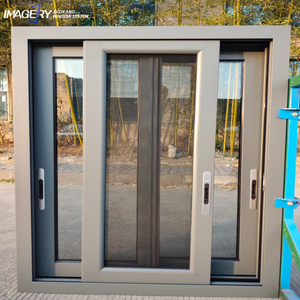
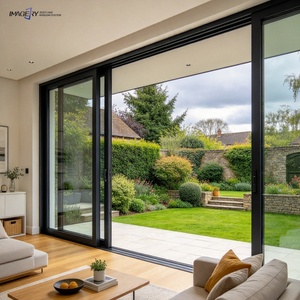
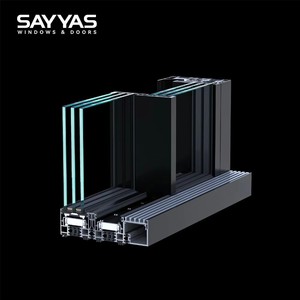
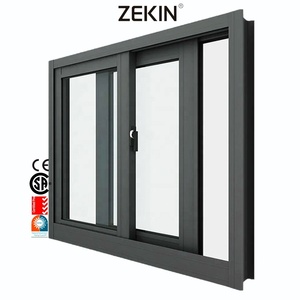
In-House Vertical Manufacturing
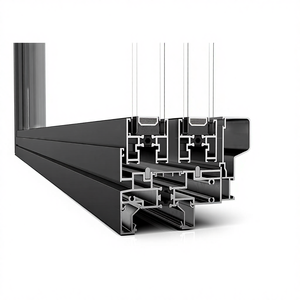
Our 430,000 sq ft factory controls profile extrusion, polyamide thermal barrier assembly, IGUs processing, hardware fitting, and precision corner crimping under ISO9001 supervision.
Certified Building Code Compliance
Extensive engineering testing supporting NFRC thermal performance ratings, CSA certification, Intertek architectural testing, Florida Hurricane Impact regulations, and Australian AS2047 standard compliance.
Project-Crated Site Logistics
Export packaging features heavy-duty steel-reinforced crating, protective film wrapping, corner shock absorbers, and detailed elevation layout tags to optimize on-site sorting and quick installation.
1. Executive Industry Overview: Sourcing Aluminum Glass Windows from China
The global architectural fenestration market is undergoing a structural transition toward high-performance, low-E energy efficient systems. Commercial developers, facade engineers, and volume building contractors increasingly rely on specialized Chinese OEM/ODM manufacturing hubs—specifically within the Foshan and Guangdong industrial clusters—to source custom thermal-break aluminum windows and expansive sliding/folding glass doors. Sourcing directly from top-tier Chinese window suppliers offers unprecedented economies of scale, structural flexibility, and advanced material engineering that meets or exceeds North American (NFRC/NAFS) and European (CE/EN) building code benchmarks.
However, navigating the supplier ecosystem requires rigorous technical evaluation. B2B procurement officers must look beyond base profile costs and evaluate complete structural assemblies: structural aluminum alloy selection (6063-T5 vs. 6060-T66), thermal break technology (Technoform polyamide PA66 GF25 strips versus sub-standard PVC infills), double or triple-pane Insulated Glass Units (IGU) with argon gas fill and Low-Emissivity coatings, and multi-point locking hardware integration (Roto, Siegenia, or Sobinco). This whitepaper provides commercial buyers with an exhaustive, data-driven methodology for auditing Chinese suppliers, establishing strict specifications, and securing long-term supply chain efficiency.
Key Takeaway for B2B Procurement Managers
A window's structural and thermal performance is only as reliable as its weakest component. Always audit thermal strip raw materials (demand PA66 GF25 certification), sealant chemical composition (Dow Corning or Tremco structural silicone), and corner key crimping accuracy to prevent structural deflection and air/water infiltration under extreme wind loads.
2. Engineering Benchmarks: Thermal Break Technology & Structural Ratings
To meet modern building energy codes such as ENERGY STAR 7.0 in North America or Title 24 in California, thermal performance metrics—specifically the overall window U-factor and Solar Heat Gain Coefficient (SHGC)—must be calculated at the whole-assembly level. Leading Chinese aluminum window wholesalers employ European-style polyamide thermal barrier strips to isolate internal and external extrusion chambers, effectively stopping conductive thermal transfer.
| System Category | Structural Profile Alloy | Thermal Break Strip | Glass Configuration (IGU) | Target U-Factor (BTU/h·ft²·°F) | Structural Rating Standard |
|---|---|---|---|---|---|
| Passive House Casement | 6060-T66 High Precision | PA66 GF25 (34mm Multi-Cavity) | Triple Glass 6mm Low-E + 16Ar + 5 + 16Ar + 6 Tempered | 0.14 – 0.18 | NFRC / CE EN 14351-1 |
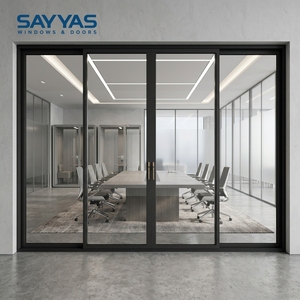
| Heavy-Duty Lift & Slide Door | 6063-T5 Heavy Wall 2.0-3.0mm | PA66 GF25 (24mm Strip) | Double Glass 6mm Low-E + 18Ar + 6mm Clear Tempered | 0.26 – 0.30 | ASTM E330 / AAMA 101 |
| Hurricane Impact Sliding Window | 6063-T6 Architectural Grade | High-Density Polyamide | Laminated Impact: 6mm + 1.52PVB/SGP + 6mm Low-E IGU | 0.28 – 0.32 | TAS 201/202/203 (Florida Building Code) |
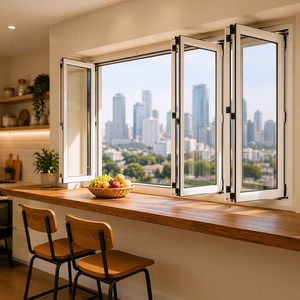
| Narrow-Frame Bifold Patio Door | 6063-T5 Structural Profile | PA66 Thermal Isolation | Double Glass 5mm Low-E + 12Ar + 5mm Tempered | 0.30 – 0.34 | AS2047 / AS1288 (Australia) |
Beyond thermal performance, commercial buyers must mandate structural wind load verification under ASTM E330 (Design Pressure ratings) or AS2047 (Ultimate Limit State wind loads). High-rise multi-family and coastal resort developments demand structural profiles capable of resisting upwards of 3500 Pa (equivalent to Category 4-5 hurricanes). Superior Chinese manufacturers utilize reinforced corner cleats with double-component structural epoxy injection to ensure watertight integrity, corner rigidity, and resistance to frame wracking during transport and installation.
3. 2025–2030 Future Procurement & Product Development Trends
The global fenestration sector is experiencing rapid technological evolution driven by decarbonization mandates, architectural preferences for expansive glass surfaces, and smart building integration. Sourcing directors looking to future-proof their supply chains should track the following four macro trends:
Trend 1: Micro-Slim Sightlines & Concealed Frame Architecture
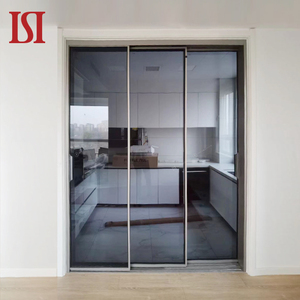
Modern luxury residential and high-end commercial design demands ultra-narrow frame profiles that maximize day-lighting and unobstructed panoramic views. The industry is moving from traditional 75mm-90mm visible frame widths toward ultra-slim 18mm-25mm interlocking stiles on sliding doors. Achieving structural compliance with minimal aluminum sightlines requires advanced structural silicone bonding (tape or liquid silicone) where the glass pane itself acts as a primary load-bearing element within the frame envelope.
Trend 2: Vacuum Insulated Glass (VIG) Integration
While triple-pane double-argon IGUs have traditionally been the standard for cold-climate insulation, Vacuum Insulated Glass (VIG) is quickly becoming the premium standard. VIG technology eliminates the gas gap by using microscopic pillar spacers between two glass panes under a high vacuum environment. This delivers U-factors down to 0.08 BTU/h·ft²·°F in a ultra-thin 8.3mm profile thickness. Chinese window manufacturers are currently leading mass-market production of VIG-ready thermal break frames, drastically reducing shipping weight and freight costs compared to bulky triple-glazed units.
Trend 3: Low-Carbon Extrusion & Circular Material Sourcing
European and North American green building frameworks (LEED, BREEAM) now enforce embodied carbon accounting across building materials. Leading Chinese suppliers are switching to primary aluminum billets processed via hydroelectric power (green aluminum) and utilizing post-consumer recycled content up to 75%. Requesting Environmental Product Declarations (EPD certifications) from your Chinese wholesale supplier is fast becoming a standard procurement prerequisite.
Trend 4: Automated Architectural Hardware & Smart Building Integration
The integration of motorized drive mechanisms concealed inside thermal-break frames allows large-format sliding doors weighing over 500 kg per panel to be operated seamlessly via smart home automation systems, wall switches, or mobile apps. Modern high-end suppliers in China integrate magnetic levitation (Maglev) drive technology, electromagnetic lock systems, and sensor-driven anti-pinch safety barriers straight from the factory floor.
4. Strategic Guidance: OEM vs. ODM Sourcing Models in China
When establishing direct supply partnerships with Chinese factories, selecting between OEM (Original Equipment Manufacturer) and ODM (Original Design Manufacturer) models determines project lead times, tooling investment, and certification ownership:
- The OEM Route (Custom Extrusion Die Development): Ideal for window brand owners, national distributors, and proprietary project developers. OEM sourcing involves designing customized aluminum extrusion profiles, paying one-time die tooling fees (typically $800–$2,500 per die set), and undertaking independent NFRC/CSA certification testing. This provides 100% IP control and unique market differentiation.
- The ODM Route (Turnkey Standardized Systems): Ideal for real estate developers, general contractors, and regional wholesalers needing immediate stock without development lead times. ODM suppliers offer pre-certified, pre-engineered window systems (Casement, Sliding, Tilt & Turn, Bifold) with existing test reports, enabling immediate order execution and faster ocean freight dispatch.
Frequently Asked Questions (B2B Sourcing FAQ)
Critical operational, quality control, and shipping questions answered by fenestration engineering specialists.