Engineering-Grade Architectural Portfolio
Explore our export-certified aluminium window and door systems, precision-engineered for North American, European, and Australian structural and thermal compliance.
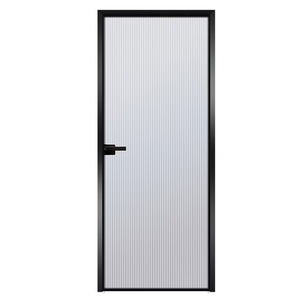
Aluminum Alloy Flush Door for Villa Living Room Partition
Thermal break aluminum partition system featuring concealed multi-point hardware, acoustic dampening core, and seamless low-profile threshold designed for luxury apartments and villas.
View Details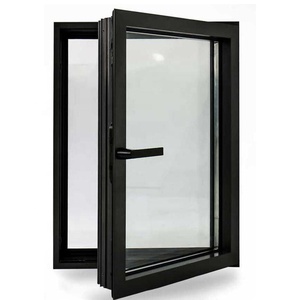
Passive House Energy Rating Crank Awning Window
Ultra-low U-factor triple-glazed awning window with heavy-duty steel linkage operator, multi-layer EPDM seals, and exceptional air tightness for Passive House projects.
View Details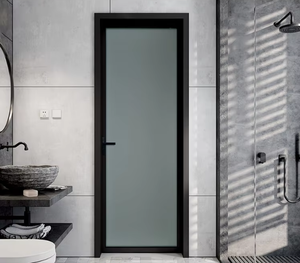
RG50 Minimalist Soundproof Aluminum Swing Door
Ultra-slim sightline aluminum frame with high STC acoustic insulation glass package, engineered for corporate offices, modern kitchens, and luxury interior partitions.
View Details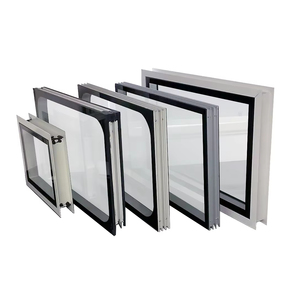
SHP Premium Powder-Coated Cleanroom Window
Double-flush structural tempered glass panel with anti-static fluorocarbon powder coating, designed for hygienic facilities, pharmaceutical labs, and high-tech spaces.
View Details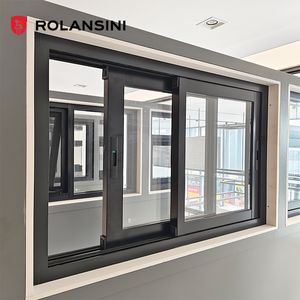
Rolansini Sound Insulation Double Glazed Sliding Window
Heavy-duty dual-track sliding system equipped with stainless steel precision rollers, high-density weather stripping, and thermal break structural profile.
View Details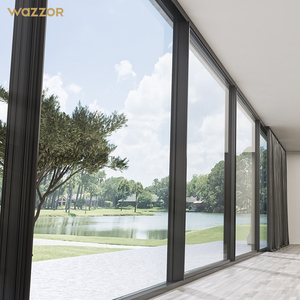
Wazzor Commercial Double Glazed Sliding Door & Window
Australian-standard tested structural sliding window and door system engineered for extreme wind load resistance, thermal isolation, and high traffic use.
View Details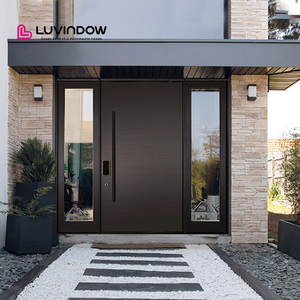
Anti-Theft Waterproof Villa Front Entry Security Door
Armored aluminum main gate door with integrated multi-point deadbolt locking, thermal break reinforcement, and weather-resistant architectural anodized coating.
View Details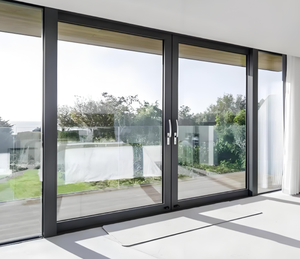
Hurricane Impact Black Aluminum Patio Sliding Door
Laminated impact glass sliding door system engineered for coastal wind-borne debris zones, compliant with rigorous structural design pressure (DP) standards.
View DetailsGlobal Sourcing Excellence: Enterprise Manufacturing Strength & Technical E-E-A-T
When procurement directors, real estate developers, and commercial contractors evaluate international suppliers for architectural fenestration, the decision pivots on verifiable engineering capabilities, rigorous testing parameters, and supply chain accountability. TropiAlu Windows & Doors Manufacturing Co., Ltd. stands as an industry benchmark in China's manufacturing landscape, operating a state-of-the-art 430,000-square-foot production base fully dedicated to precision-engineered aluminum profile extrusion, thermal break assembly, insulating glass fabrication, and complete system integration.
For nearly two decades, TropiAlu has successfully exported over 10,000 structural window and door projects across North America, Australia, Europe, and the Middle East. Sourcing architectural glazing across international borders requires strict alignment with localized building codes. Our custom structural systems carry comprehensive third-party testing and certification documentation, including:
- NFRC (National Fenestration Rating Council): Verified U-factor, Solar Heat Gain Coefficient (SHGC), and Visible Transmittance (VT) values.
- CSA Group & NAFS (North American Fenestration Standard): Structural Performance Grade (PG), Air Infiltration, and Water Penetration Resistance testing up to severe Design Pressures (DP).
- ENERGY STAR® Certification: Optimized frame thermal isolation for Northern, North-Central, and Southern climate zones.
- Intertek & AS2047 Compliance: Rigorous structural wind load and cyclic water penetration testing tailored for Australian and hurricane-prone coastal regions.
Integrated North American Local Support Network: To bridge international time zones and technical coordination gaps, TropiAlu operates dedicated factory showrooms and regional technical centers in California and New Jersey. Commercial project teams benefit from 48-hour local response times, on-site shop drawing review, hardware sample verification, and field installation guidance.
Every fenestration unit undergoes strict in-house quality control (QC) prior to export. Extruded aluminium alloys utilize 6063-T5/T6 structural tempered billets finished with Qualicoat-certified powder coatings or AAMA 2605-grade fluorocarbon (PVDF) finishes resistant to UV degradation, salt spray corrosion, and chemical exposure. By controlling the complete fabrication cycle—from raw billet extrusion to final crating—TropiAlu delivers architectural reliability that reduces field risk and ensures long-term building lifecycle performance.
Technological Innovations in Modern Architectural Glass & Aluminium Fenestration
The global building envelope market is undergoing a structural transition driven by stringent energy decarbonization mandates, extreme weather resilience requirements, and architectural demands for expansive transparent spans. Modern aluminum and glass fenestration is no longer a passive barrier; it is an active mechanical shield regulating building thermodynamic efficiency.
PA66GF25 Polyamide Thermal Barriers
Replacing traditional pour-and-debridge polyurethane insulation, continuous 25% glass-fiber reinforced polyamide (PA66GF25) strips structurally isolate interior and exterior aluminium profiles, drastically cutting thermal conductivity while preserving structural rigidity under differential expansion.
Spectrally Selective Low-E Glazing
Double and triple-silver magnetron sputtered Low-Emissivity coatings reflect far-infrared heat while permitting maximum visible light. Coupled with 90%+ Argon or Krypton gas fills and warm-edge composite spacers, central glass U-factors drop below 0.12 BTU/h·ft²·°F.
SGP Laminated Hurricane Impact Glass
For high-velocity hurricane zones (HVHZ), glass packages incorporate SentryGlas® (SGP) ionoplast interlayers sandwiched between heat-strengthened glass lites. SGP offers 5x the tear strength and 10x the stiffness of standard PVB, preventing envelope breach during severe windstorm events.
Acoustic Engineering & Structural Weather Sealing
Urban density demands higher Sound Transmission Class (STC) and Outdoor-Indoor Transmission Class (OITC) performance. TropiAlu’s soundproof window systems combine asymmetrical glass thicknesses (e.g., 6mm + 12Ar + 8.76mm Laminated) with multi-chambered EPDM gasket gaskets. This configuration disrupts sound wave resonance across high and low frequencies, achieving acoustic attenuation exceeding STC 42 dB—ideal for airport corridors, arterial roadways, and dense metropolitan residential towers.
Water penetration resistance relies on pressure-equalized drainage cavities inside the aluminium profile structure. Internal weep channels with gravity-operated check valves allow incidental condensation and wind-driven rain to drain outward quickly while preventing back-draft air infiltration during high-pressure storm conditions.
Future Sourcing & Procurement Trends in B2B Glazing (2025–2030)
Procurement managers and master builders must align their international supply chain strategies with emerging regulatory standards, environmental declarations, and technological integration over the coming decade. Sourcing fenestration products is evolving from a unit-cost comparison to a holistic lifecycle calculation.
1. Decarbonization & Low-Carbon Recycled Aluminium
Aluminum smelting is energy-intensive; however, secondary (recycled) aluminum consumes 95% less energy than primary production. Leading global developers now require Environmental Product Declarations (EPDs) detailing Embodied Carbon (cradle-to-gate Global Warming Potential). TropiAlu is expanding its use of certified low-carbon aluminium billets smelted using renewable hydropower, enabling developers to earn crucial LEED v4.1 and BREEAM sustainability credits.
2. Building-Integrated Photovoltaics (BIPV) & Dynamic Smart Glass
The line between envelope glazing and power generation is blurring. Future-proof procurement schedules increasingly feature Electrochromic (EC) smart glass that tint dynamically via low-voltage electrical signals to regulate solar heat gain without blunts or shades. Concurrently, semi-transparent BIPV vision glass is being specified in commercial spandrel units to turn building facades into distributed solar energy producers.
3. Industrialized Prefabrication & Unitized Window Walls
On-site labor shortages and rising job-site installation costs across North America and Europe are driving demand for unitized curtain walls and pre-glazed window wall systems. Factory-assembled, fully sealed fenestration units ship direct from China with integrated structural anchors, drastically reducing installation schedules, field sealant dependencies, and job-site safety overhead.
Comprehensive Structural & Thermal Engineering Performance Matrix
To assist technical specifying engineers and project architects in selecting the correct system configuration, the following comparative engineering matrix outlines benchmark parameters across standard operational fenestration categories:
| System Operational Category | Typical Profile Depth | Thermal Break Tech | Achievable U-Factor (US) | Acoustic Rating (STC) | Max Design Pressure (DP) |
|---|---|---|---|---|---|
| Thermal Break Casement / Awning | 65mm – 80mm | PA66GF25 24mm Strip | 0.18 – 0.24 BTU/h·ft²·°F | STC 38 – 45 dB | DP 70 – DP 100 |
| Lift & Slide Heavy Patio Door | 140mm – 200mm | PA66GF25 Multi-Chamber | 0.22 – 0.28 BTU/h·ft²·°F | STC 35 – 40 dB | DP 60 – DP 85 |
| Minimalist Sliding System | 110mm – 150mm | Concealed Structural Polyversum | 0.26 – 0.32 BTU/h·ft²·°F | STC 32 – 38 dB | DP 50 – DP 70 |
| Top-Hung Bifold Door System | 75mm – 85mm | PA66GF25 20mm Strip | 0.24 – 0.30 BTU/h·ft²·°F | STC 34 – 39 dB | DP 45 – DP 65 |
| HVHZ Hurricane Impact Sliding | 120mm – 160mm | Heavy Reinforcement Strut | 0.28 – 0.35 BTU/h·ft²·°F | STC 38 – 44 dB | DP 90 – DP 120+ |
frequently Asked Questions (FAQ) for Overseas B2B Procurement
How do TropiAlu's window systems comply with local North American building energy codes?
Our thermal break windows are engineered specifically to meet or exceed regional Energy Star®, IECC (International Energy Conservation Code), and Title 24 guidelines. By combining PA66GF25 polyamide thermal struts, warm-edge spacers, and double or triple-pane glass coated with dual-silver Low-E options, we achieve whole-unit U-factors down to 0.18 BTU/h·ft²·°F. Official NFRC matrix simulation and test reports are provided during shop drawing submittals.
What structural guarantees and finish warranties are provided for coastal export orders?
For oceanfront or severe salt-spray environments, we specify AkzoNobel or PPG AAMA 2605 fluorocarbon (PVDF) coatings backed by a 15 to 20-year finish warranty against chalking, fading, and peeling. Structural extrusions are crafted from architectural 6063-T6 aluminum alloy. Hardware options include 304 or 316 marine-grade stainless steel multi-point locking mechanisms to eliminate galvanic corrosion risks.
Can factory shop drawings be customized to match OEM private-label architectural branding?
Yes. As an established OEM/ODM manufacturer for major overseas distributors and brand owners, our CAD/BIM engineering team prepares complete submittal packages under your private label. This includes fully customized cross-sectional profile drawings, installation detail sheets, hardware branding, protective film branding, and crating labels matching your exact job-site mark schedules.
How are fragile glass and heavy aluminum assemblies packaged to guarantee damage-free sea transit?
All units undergo export packaging engineering. Frames are wrapped in protective anti-scratch film, corner-guarded with high-density EVA foam, and bundled with plastic strapping. Glazed assemblies are secured inside fully enclosed, ISPM-15 compliant heat-treated fumigated plywood crates with integrated lifting skids for forklift unloading. Every crate is labeled with opening schedules, elevation markers, and center-of-gravity handling indicators.
What is the typical lead time for custom architectural production and sea freight delivery?
Upon final sign-off of shop drawings and glass sample approvals, standard factory production cycles run between 25 to 35 calendar days depending on order volume and custom finish requirements. Ocean transit times to US West Coast ports (e.g., Los Angeles/Long Beach) average 14–18 days, while East Coast ports (e.g., Newark/Savannah) take approximately 28–32 days. Air-freight hardware samples or expedited prototype production can be arranged within 10 days.
How does TropiAlu resolve field installation questions or technical discrepancies post-delivery?
Our direct local presence in California and New Jersey allows North American project teams to receive immediate technical assistance. We provide step-by-step installation manuals, 3D exploded assembly diagrams, and direct video conferencing with our senior structural engineers. If necessary, field technical representatives can coordinate on-site assistance for large-scale commercial project developments.
Partner with a World-Class Aluminium Fenestration Manufacturer
Request our comprehensive product technical binder, CAD profile details, and factory-direct pricing for your upcoming commercial or residential development project.
Get Catalog