Engineered Aluminium Internal Door & Partition Systems
Explore our export-certified interior door products designed for high-traffic commercial installations, luxury residential spaces, and modern office interiors.
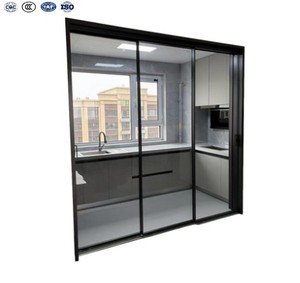
Modern Minimalist Soundproof Aluminum Glass Partition Door
View Product Details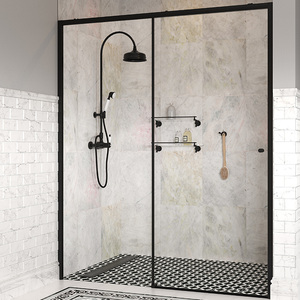
Best Price Modern Frameless Aluminium Sliding Shower Door
View Product Details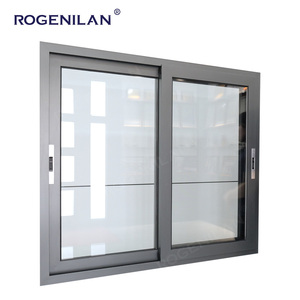
Custom Slide Home Sunroom Aluminum Sliding Glass Window
View Product Details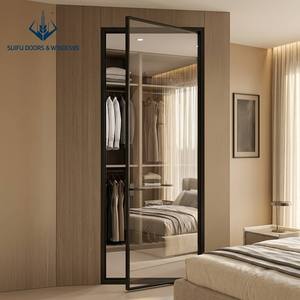
Minimalist Slim Frame Aluminum Fluted Glass Swing Door
View Product Details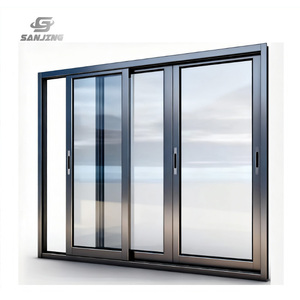
Factory Price Aluminium Double Glazed Sliding Window
View Product Details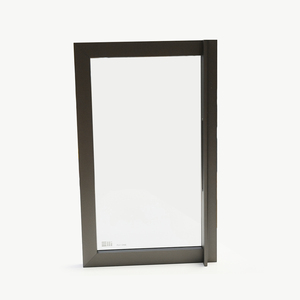
Italian Modern Aluminum Slim Frame Glass Kitchen Doors
View Product Details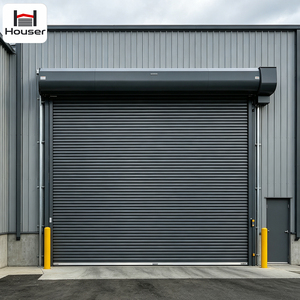
Hurricane Resistant Coastal Aluminum Roller Shutter Door
View Product Details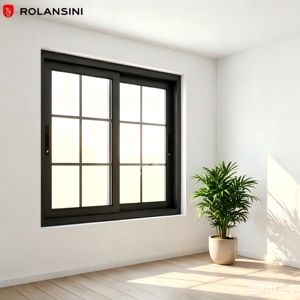
AS2047 Certified Hurricane Impact Aluminium Sliding Windows
View Product DetailsWhy Global Developers & Import Distributors Trust TropiAlu
As a direct factory-direct manufacturer spanning nearly two decades of fenestration experience, TropiAlu Windows & Doors Manufacturing Co., Ltd. delivers fully integrated, project-tested interior aluminum door systems and architectural partitions. Operating out of a state-of-the-art 430,000 sq. ft. production base in Foshan, China, our infrastructure bridges the gap between high-capacity automated extrusions and strict international building standard compliance.
Direct Scale & Vertical Integration
We control raw aluminum profile extrusions, T5/T6 heat treatment, CNC precision machining, anodizing, glass lamination, and acoustic seal fitting in-house. This zero-middleman process guarantees complete dimension fidelity across 10,000+ completed global builds.
Global Testing & Standards Integrity
Selected door and partition systems maintain rigorous compliance documentation including NFRC, CSA, ENERGY STAR, Intertek, NAFS, and AS2047 certification support, eliminating regulatory bottlenecks for North American and Australian developers.
Local US Footprint & Rapid Logistics
With strategic showroom support in California and New Jersey, North American buyers evaluate mockups and touchpoints locally. Our project engineering team guarantees a 48-hour local response protocol for drawing sign-offs and installation support.
Engineering Principles of Commercial Aluminium Internal Doors
Modern interior architecture demands a delicate synthesis of spatial transparency, structural rigidity, acoustic privacy, and mechanical endurance. Unlike exterior fenestration focused primarily on wind-load and thermal insulation, aluminium internal doors present distinct engineering challenges regarding slim sightlines, sound transmission loss, surface wear resistance, and hardware integration.
1. Metallurgical Profiles: 6063-T5 vs. 6063-T6 Alloys
The foundation of high-performance internal doors lies in extruded aluminium alloy selection. TropiAlu utilizes virgin 6063-T5 and T6 structural aluminium extrusions with wall thicknesses spanning 1.4mm to 3.0mm. T5 temper offers superior surface smoothness for anodizing and powder coating, whereas T6 temper provides higher yield strength for ultra-slim, floor-to-ceiling glass swing doors up to 3000mm in height.
2. Acoustic Insulation Engineering (STC 38dB - 45dB)
To achieve commercial-grade sound isolation between office conference rooms, hotel suites, or residential bedrooms, internal doors incorporate multi-layered acoustic systems. Utilizing laminated sound-control PVB/SGP glass units combined with concealed magnetic drop-down bottom seals and perimeter EPDM gaskets, our doors damp sound transmission effectively across critical human speech frequencies.
3. Surface Coating & Finishes for High-Traffic Environment Durability
Interior door frame finishes must withstand continuous tactile contact, chemical cleaning agents, and UV exposure. TropiAlu applies three advanced surface treatment technologies:
- Micro-Arc Anodizing (15-25 Microns): Produces a metallic matte finish resistant to scratches, finger marks, and corrosion. Ideal for minimalist Italian-style slim glass doors.
- Fluorocarbon PVDF Spraying: Multi-coat baked resin system ensuring color retention, zero chalking, and exceptional resistance to high-humidity environments like bathroom sliding doors.
- Zero-VOC Powder Coating & Thermal Wood Grain Transfer: Delivers authentic timber textures combined with structural fire-rated aluminium performance for luxury hospitality suites.
Future Sourcing & Procurement Trends for Aluminium Internal Doors
Commercial procurement directors, architectural buyers, and private-label distributors must align their supply chains with evolving building codes, occupant wellness criteria, and structural innovations. Below are key macro trends shaping aluminium internal door procurement over the next decade:
Trend A: Ultra-Narrow Sightline Partitions (16mm - 25mm Visible Frame)
Architectural interior aesthetics have shifted decisively toward invisible aluminum framing. Sourcing managers are increasingly prioritizing door manufacturers equipped with high-precision CNC milling capable of housing heavy tempered glass (up to 12mm) into ultra-slim profile borders of 16mm to 25mm without structural sagging over extended duty cycles.
Trend B: Concealed Hardware & Magnetic Soft-Closing Mechanisms
The market for luxury residential and office spaces is moving away from traditional surface-mounted hinges and mechanical latches. Demand is surging for 3D-adjustable concealed pivot hinges, magnetic mute locks, and dual-direction hydraulic soft-closing sliding tracks that eliminate acoustic slam noise and present clean flush surfaces.
Trend C: Circular Aluminium Sourcing & Decarbonization (LEED v4)
Environmental, Social, and Governance (ESG) mandates are driving global contractors to request Environmental Product Declarations (EPDs). Forward-thinking manufacturers utilize low-carbon secondary recycled aluminium billets, reducing embodied carbon footprints by up to 60% and enabling projects to achieve high LEED v4 and BREEAM certifications.
Trend D: Pre-Engineered Knock-Down (KD) & Modular Shipping
Soaring international sea-freight costs have transformed packaging logic. Strategic importers now source modular pre-mitered KD (Knock-Down) internal door frames fitted with corner key quick-locking alignment systems. This layout maximizes ocean container volumetric efficiency by 300% while reducing site assembly labor costs.
Technological Advancements in Interior Glass & Aluminium Systems
As manufacturing processes integrate digital automation, the aluminum internal door sector is witnessing significant technological breakthroughs:
PDLC Smart Switchable Privacy Glass
Integrating Polymer Dispersed Liquid Crystal (PDLC) laminated films directly within double-glazed aluminum door frames allows partitions to switch instantly from crystal-clear to 99% opaque white at the press of a button or smart office command.
Fluted & Ribbed Architectural Glass
Custom decorative glass integration—such as Moru, fluted, reeded, frosted, and tinted safety glass—provides subtle light refraction while preserving privacy in modern kitchen dividers and executive suites.
Smart Access Control Integration
Concealed wiring channels inside hollow aluminum door stiles allow seamless installation of biometric fingerprint scanners, RFID readers, and wireless smart locks directly into the metal frame.
Evaluating Sourcing Channels: Manufacturer Direct vs. Local Fabricator
When specifying large volume internal doors for multi-family residential towers or hotel developments, selecting the correct tier of supplier is critical for budget control, lead-time precision, and technical compliance.
| Evaluation Parameter | TropiAlu Factory Direct (OEM/ODM) | Local Import Traders / Distributors | Local Small Fabricators |
|---|---|---|---|
| Pricing Structure | Factory Direct Cost (Zero markup) | High (30% - 60% distributor margin) | Very High (Expensive local labor) |
| Production Capacity | 430,000 sq. ft base / 50,000 m²/month | Dependent on supplier stock | Limited small-batch capacity |
| Customization Depth | Full custom profiles, dies, colors, glass | Restricted to catalog inventory | Basic cut-and-assemble options |
| Quality Control Testing | Spectrometry, Salt Spray, Hardware 200k Cycles | Visual inspection upon receipt | Manual job-site adjustments |
| Compliance Documentation | NFRC, CSA, Intertek, NAFS, AS2047 Support | Third-party generic certificates | Often uncertified |
| Job-Site Protection | Individual unit labeling, steel-crate packaging | Re-packed loose shipments | Basic bubble wrap wrap |
TropiAlu 5-Step International Quality Assurance Protocol
Frequently Asked Questions (FAQ) for Internal Door Procurement
Detailed technical and commercial answers designed for architects, general contractors, and sourcing agents importing aluminum doors.
TropiAlu interior aluminum doors and partition systems are engineered to achieve Sound Transmission Class (STC) ratings ranging from STC 35dB to STC 45dB depending on glass configuration and sealing mechanisms. Standard single-glazed glass units achieve STC 32-35, whereas double-laminated glass units equipped with acoustic PVB interlayers, perimeter EPDM weatherstripping, and concealed automatic drop-down bottom door seals achieve up to STC 45dB, making them ideal for executive conference rooms and quiet residential zones.
Yes. As a direct factory manufacturer, we support extensive OEM and ODM private-label programs for building material brands, distributors, and large developers. We manufacture custom aluminum extrusion dies according to your CAD/BIM drawings, offer private logo laser etching on hardware, apply customized protective film branding, and prepare installation manuals under your brand identity.
Every unit undergoes a multi-layer protective packaging procedure: First, individual door sashes and frames are wrapped in anti-scratch PE protective film and foam corner guards. Second, components are sealed in moisture-proof shrink wrap. Finally, units are packed into fully enclosed, fumigation-free solid plywood crates reinforced with steel banding. Each crate is tagged with elevation marks, opening numbers, and project codes matching your site installation schedule.
Selected aluminum door and window lines are tested and verified in accordance with NFRC (National Fenestration Rating Council), CSA (Canadian Standards Association), Intertek ETL, NAFS (North American Fenestration Standard), and ENERGY STAR performance criteria. We supply comprehensive factory test reports, engineering calculations, structural glass analysis, and material mill test certificates (MTC) prior to production.
We provide both premium international hardware options (such as CMECH, Hoppe, Sugatsune, and Savio) and high-grade in-house custom hardware lines. Options include concealed 3D-adjustable hinges, magnetic quiet-latch locks, flush pull handles, heavy-duty soft-closing sliding rollers tested up to 200,000 cycles, and smart access control system hardware integration.
Standard manufacturing lead time is 25 to 35 calendar days following final shop drawing approval and deposit receipt. For specialized custom powder-coating colors or custom profile extrusion die creation, lead times extend by 7 to 10 days. Expedited production schedules are available for urgent commercial job sites.
Yes. TropiAlu operates local showroom facilities in California and New Jersey, providing North American developers and general contractors with physical product evaluation touchpoints. Our engineering team provides detailed 3D installation guides, shop drawing coordination, and a 48-hour local response protocol for site technical inquiries.
We offer a comprehensive glass range including fully tempered safety glass (ESG), laminated glass (PVB/SGP), low-iron ultra-clear glass, acoustic laminated glass, frosted privacy glass, fluted/moru textured glass, tinted solar glass, and smart switchable PDLC privacy glass. Glass thicknesses range from 5mm single tempered up to 12.76mm laminated safety glass packages.
Ready to Source Architectural-Grade Aluminium Internal Doors?
Partner directly with TropiAlu Windows & Doors Manufacturing Co., Ltd. for factory pricing, certified system performance, and technical shop drawing support for your next project.
Get Catalog